
The centre in the periphery
The exhibition of works by Georgian artists and the history of the development of the Goetheanum campus were two essential aspects of the work of the Visual Arts Section this year.
In January, my Georgian colleague Sopo Kolkhidashvili asked me whether it was possible to exhibit works of her artist friends from Tbilisi (GE) at the Goetheanum. I happily agreed because the influence of Medieval Christian painting in Georgia has continued through 20th century painting to the present time. In February, we travelled to Georgia and visited twelve anthroposophically inspired artists in their studios in Tbilisi. Eight months later, at Michaelmas, we were able to open the exhibition following an extended period of preparations and another trip to Tbilisi (Anthroposophy Worldwide 11/2019).
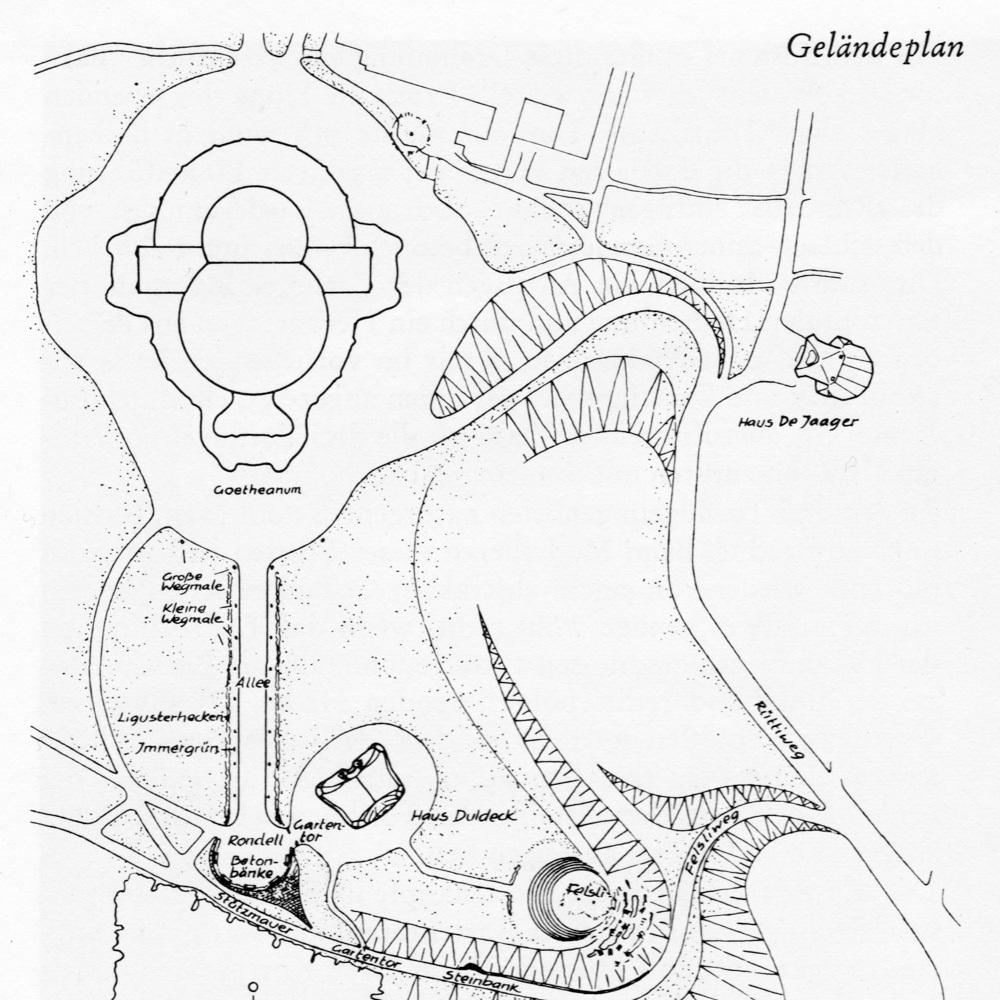
The research project on the historical development of the Goetheanum campus, which I am working on with the biologist and cultural scientist Stephan Stockmar, is another major field of work. I will continue with this work after my retirement as head of the Visual Arts Section at the end of 2019, because there are plans to publish the results of my research at Christmas 2020 in a book entitled «Experiencing the centre in the periphery: Rudolf Steiner’s design of the Goetheanum Campus».
Places of refuge and consolidation
As a landscape architect I have studied Rudolf Steiner’s landscape design in the southwest of the Goetheanum Park for over twenty years. Unfortunately, no photos exist of the building work of the First Goetheanum, nor are there any precise records of the construction periods and of Rudolf Steiner’s statements on the landscaping.
After studying 163 folders in the archives of the Johannes building association we were able to work out the construction periods of special features such as the Felsliweg (rock path), the Drachenschwänzli (dragon’s tail), the Felsli (rock) etc. Further scrutiny of the planning archives and notebooks provided more information on these features.
These structures designed by Rudolf Steiner are more than architectural works of art; they are places of refuge for the work on the hill; places of consolidation; places that invite us to bring earth and spirit together.