
Unhealed wounds can produce fear and therefore hatred
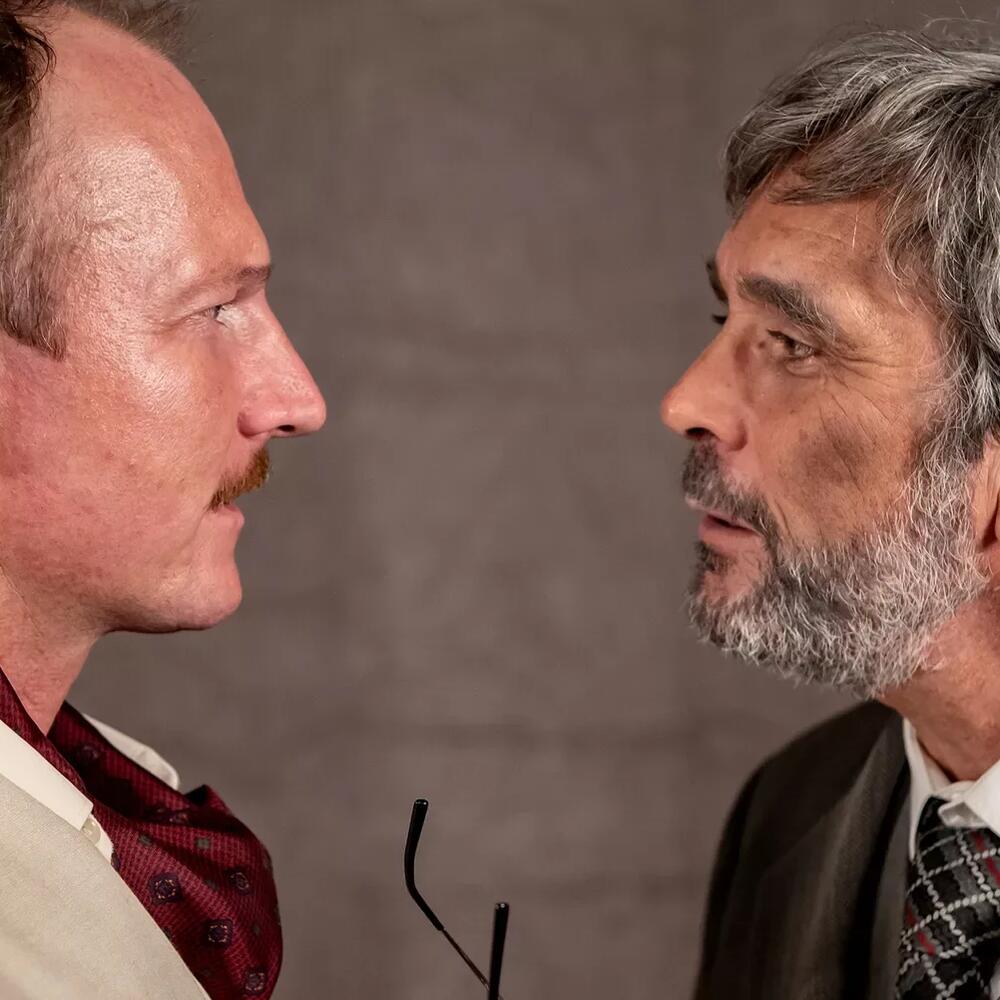
In his play ‘The Visitor’, Éric-Emmanuel Schmitt examines how differing views can be shared and tolerated. While Sigmund Freud and the Stranger acknowledge each other in their controversies, a Gestapo officer uses language to humiliate Sigmund Freud.
“This play is a great dialogue that brings the spoken word to life. It gains the power to transform people,” says the director, Valerian Gorgoshidze. While his decision to stage the play at the Goetheanum was not prompted by current political events, it is striking how, in this play, a productive dialogue between Sigmund Freud and the Stranger is overshadowed by a threat of violence.
Although the two interlocuters remain uncompromising, they respect each other. The Gestapo officer, though seemingly charming on occasion, clearly exercises power by using disrespectful, harassing and arbitrary behaviour to humiliate the other, without making any effort to explain himself or his motives. The officer has no authority of his own but is backed by an institutional power. The Nationalist, or so the play suggests, creates a vacuum bare of content and humanity that fills with violence, while Sigmund Freud and the Stranger, in their struggle for knowledge, fill a shared space with substance and meaning.
Director Valerian Gorgoshidze reads the play psychologically: “An unhealed wound and the constant expectation of being hurt again can lead to fear – fear of one’s own weaknesses.” One of the sources of evil is lack of self-respect. “We can assume that the human individuality as such is creative, without fearing that it will be overcome by the spectres of the past – for otherwise we feed the spectres. Valerian Gorgoshdze is convinced that the firm belief in the creative human power is the underlying theme of this play.
English by Margot M. Saar
Performances (in German) ‘The Visitor’ by Éric-Emmanuel Schmitt, 6 September 2026, 4.30 pm; 12 September 2026, 7 pm; 13 September 2026, 4.30 pm, Goetheanum Web (in German)