
Connecting person to person
Dear readers,In less than thirty years a small group of anthroposophists have done impressive work in Estonia.
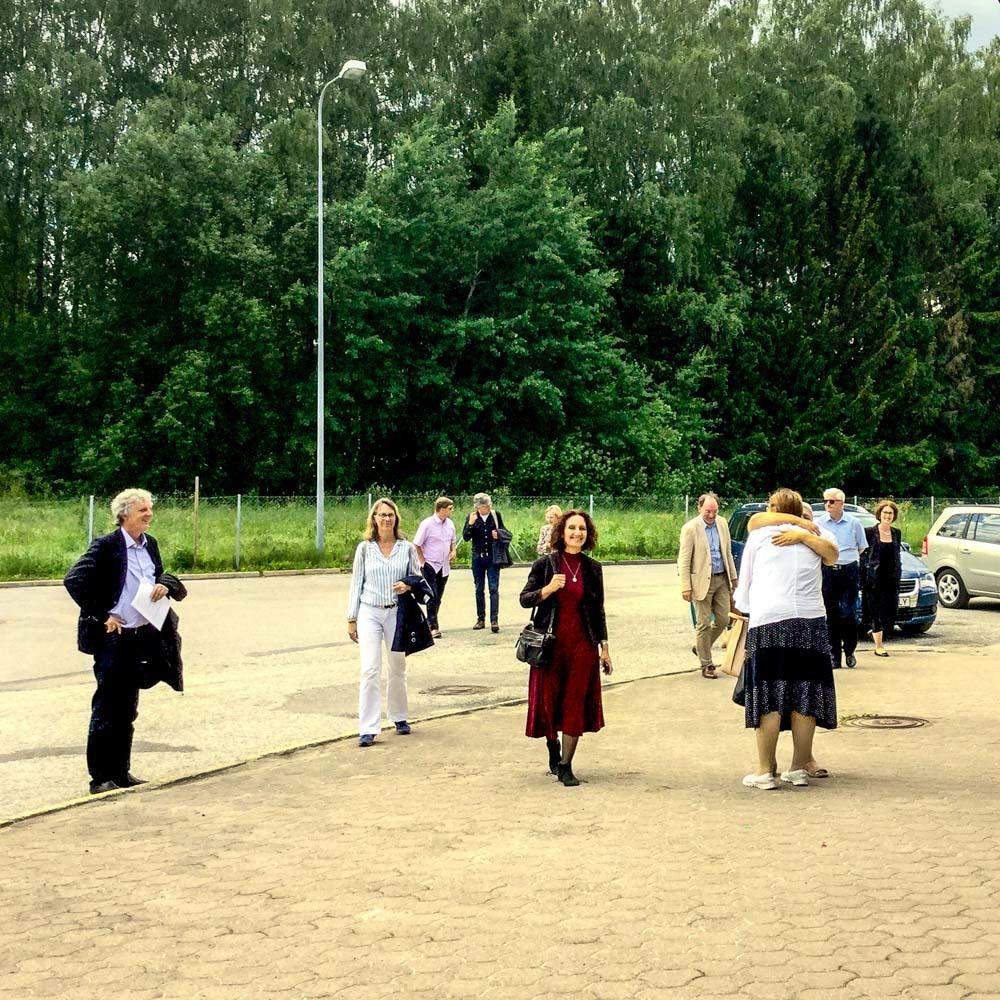
Thanks to their isolated but solid, effective and intense efforts, eight Waldorf Schools and ten kindergartens were founded, and activities emerged in the fields of special needs education, medicine and publishing. All of these initiatives are closely linked to the young Anthroposophical Society and also have global connections. In mid-June the European country representatives were able to experience this special Baltic situation during their summer meeting in Tartu.
Cultural hues and individual influences
Just a few miles from today’s east-west border to Russia, it is interesting to come across a comment Rudolf Steiner made in a discussion (GA 337b, 6 September 1920), implying that the Baltic peoples are particularly karmically disposed to develop real cosmopolitan consciousness – or fall into isolating nationalism.
It became tangible in this gathering how a global anthroposophical community arises on the one hand from the consonance of countries and cultural hues, and how, on the other hand, it relies entirely and exclusively on individuals.
The consultations focused mainly on how this contrast is reflected in the Statutes of the Anthroposophical Society: how the reality of the zeitgeist and the inspirations of the School of Spiritual Science have to come to life through the principle of the 1923/1924 Christmas Conference (connecting from person to person) in a kind of social double-domed building, and how, in this «most modern» society, the competence of the School and the shared social life come together, even in the Statutes.
Now we are looking forward to the Mystery Drama cycle that will be performed at the Goetheanum in the summer and to the intensive Education Section conference during which Rudolf Steiner’s 1919 course on the foundations of Waldorf education can be experienced again in its entirety after a hundred years of teaching experience.
We wish you a pleasant summer | Justus Wittich und Constanza Kaliks, Goetheanum