
The Goetheanum is a public place
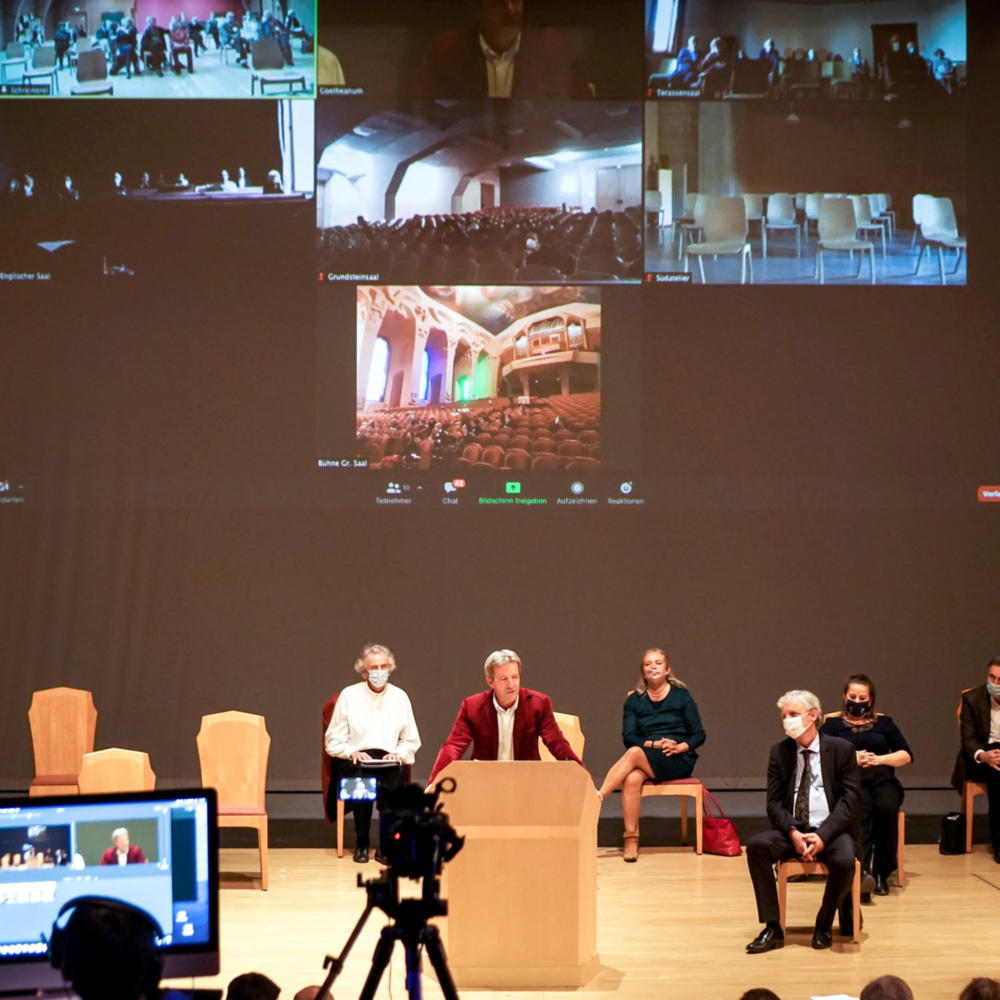
The AGM on 31 October took place with special protective measures in place, because five days before, the canton of Solothurn, where the Goetheanum is located, decided that the maximum number of persons attending public assemblies was 30. The question then was whether the AGM should be held or cancelled.
We decided to go ahead and to admit around 140 members. They were spread out across five rooms, with a maximum of 30 people in each, and connected via livestream so they could be aware of each other. Questions related to proceedings could be asked from all the rooms and a transparent and valid voting process was also possible. The meeting was also attended remotely by a few hundred members who were, however, unable to participate actively.
Facilitating the perception of Anthroposophy
The format of this meeting was new for everyone involved and illustrated once again what we have experienced many times in this extraordinary year of 2020: that the Anthroposophical Society is a public society and the Goetheanum a public building. Do we want this publicity? The answer of the Executive Council and the Goetheanum Leadership to this question is a clear ‘yes’ and they have embraced it actively since the lockdown in spring 2020. We want to keep the Goetheanum and Anthroposophy in the public domain – by applying Covid regulations responsibly and by keeping the building ‘physically’ as open as possible. We strive for Anthroposophy to be publicly perceived, for instance with the book Perspectives and Initiatives in the Times of Coronavirus, which was put together within four weeks and published at the end of May, with contributions from all the Sections; or with the lecture series The Signature of Our Time, which is publicly available on video. We want to make the Anthroposophical Society and the Goetheanum publicly accessible when we offer conferences, meetings and performances.
Our time, the earth and humanity are faced with challenges and we want to make contributions out of anthroposophy that can help develop ways of meeting these challenges.