
Making life flow
It is an ancient mystery that the soul must be purified before it can enter the spirit realm. This is why we find wells and water bowls for the cleansing of body and soul in the vestibules of temples and sanctuaries. Humour can also be a form of purification.
Cleansing the soul with humour? ‘Humour’ derives from the Latin word for moisture or fluid. The German writer and philosopher Friedrich Theodor Vischer (1807 – 1887) described humour as the most spiritual of waters. And Rudolf Steiner noted, “We will only truly rise to the spirit realm if we don’t try to approach it with selfish sentimentality but in purity of soul - and this always requires humour” (GA 181, lecture of 3 July 1918). He also pointed out that “Those who fail to find humour in what is humorous will also fail to find earnestness in what is earnest” (GA 277a, address of 29 August 1915). There should be no rash self-limitation, “You may easily think it improper to treat ‘sacred things’ [as presented in the Twelve Moods] satirically. But […] if you wish to advance in the sphere of spirituality, it is a basic requirement to not forget to laugh at what, if rightly judged, is worth laughing at in the world” (GA 169, lecture of 11 July 1916).
Loving devotion to the world
There are conditions, though. I need to devote myself lovingly to the world, connect with it in interest and understand its inconsistencies in order for the ‘I’ to be able to distance itself, or anthroposophically speaking, for the astral body to withdraw from us, allowing us to smile or laugh. If this becomes too strong, we have derision and cynicism or, in other words, a worldview based on antipathy rather than sympathy.
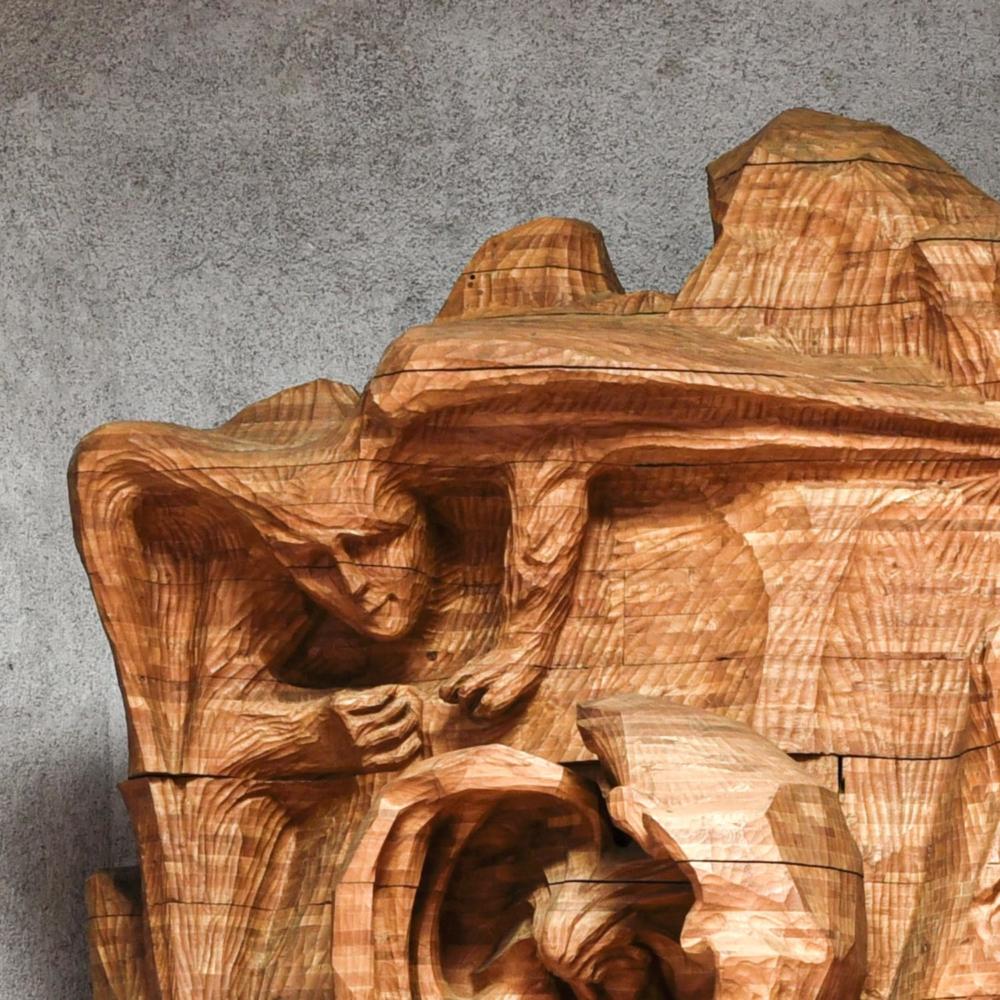
The senses perceive the diversity that surrounds us, the mind orders the sense impressions by comparing concepts, and reason recognizes the unity in this diversity, the deeper truth of the cosmic order. Things become comical when these relationships are out of sync: what is unreal claims to be real; or the mind brings two incompatible concepts together. When a person (concept 1) moves like an ape (concept 2), we tend to find this funny because of the inconsistency between what we see and what can be real. Rudolf Steiner pointed out that “Becoming aware of this inconsistency between a created object and its inner potential strikes us as comical” (GA 271).
Inner serenity
With humour, one can still discern the whole behind the inconsistency – it is not simply the belittling of something bigger. When the ‘I’ is at ease, we are open to be amused; an inner serenity takes hold and we are ready to be diverted by life’s manifestations while continuing to be able to meet with earnestness what is earnest.
I have always wondered why, in the statue of the Representative of Humanity, the ‘world humour’ hovers above everything, until I found the following statement by Rudolf Steiner: when we laugh we strive for “liberation, so that we don’t allow ourselves to be caught up in things unworthy of us, but with a smile rise above the things we must never be enslaved to” (GA 59, lecture of 3 February 1910). Humour ultimately helps to make life and its encounters flow again.