
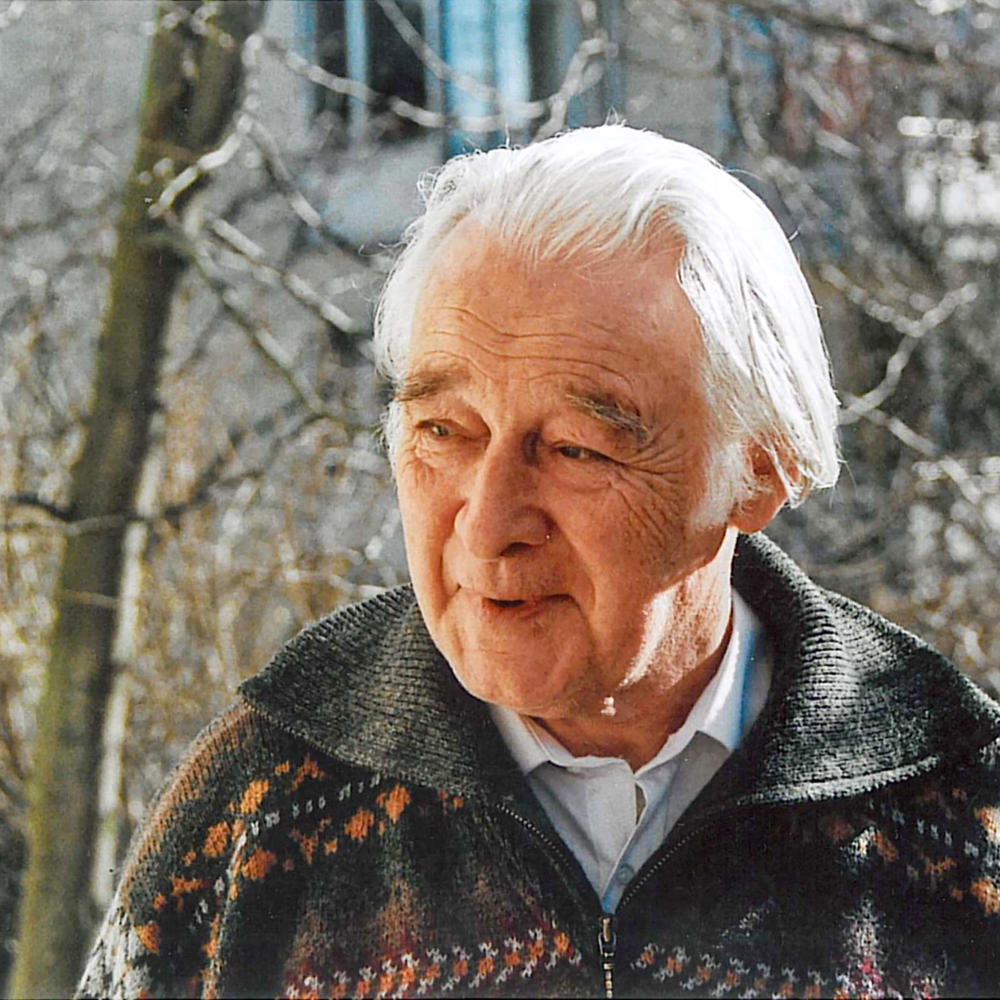
Jochen Bockemühl
Jochen Bockemühl (18 Nov. 1928) crossed the threshold on 21 May 2020. He had worked at the Natural Science Section’s Research Institute since 1956 and as head of the Section from 1971 to 1996 he greatly influenced the anthroposophical approach to Goethean science.
His investigations into the metamorphosis of leaves and the development of individual leaves with their reverse form changes belong to the classics of Goethean morphology. He worked equally creatively on questions of inheritance and the atmosphere, essential characteristics of landscapes and on plants used in preparations and in medicine. Observation and the formation of ideas were for him stepping stones on the way to a deepened understanding of the relationship we have with nature and with ourselves. For Jochen Bockemühl, the self-experience in the individual cognitive process was the crucial step on the way from understanding nature to spirit-knowledge.
Explorer of Goetheanism
Together with Georg Maier Jochen Bockemühl helped many students on the courses on anthroposophical natural science to find access to Goetheanism. In Dornach (CH), he developed courses for pharmacists (initiated by Weleda staff members), for young farmers (with Georg Maier and Kari Järvinen) and for physicians (with Friedrich Edelhäuser), exploring the Goethean method in relation to these professions, and later on he carried them into the world at large, offering seminars on all continents with his wife Almut.
Jochen Bockemühl, the son of an electrical engineer and a painter, began his earthly journey on 18 November 1928 in Dresden (DE). In his working biography he took a path from science via the arts to religion. Having studied biology, he gained his doctorate in Tübingen in 1955 with a study on collembola, or springtails. He started his career in the Natural Science Section as a photographer, providing material for documentaries. Later he began to paint, an activity that he did not see as ‘art’ but as a path of inner development. When returning from hikes, excursions or his many journeys he would sit down, usually in the evening, and transform his impressions into large-scale pastel drawings. He must have done hundreds. Painting allowed him to enter more deeply into the mood and essence of landscapes, and – in keeping with what Rudolf Steiner said about the relationship of memory and imagination – to develop his imaginative faculties.
Practical approach
In a third phase, Jochen Bockemühl’s striving for spiritual insight focused on the study of nature as a way of achieving consciousness of his own thinking activity and capacity for experience. His research into the true relationship between human beings and the world, between micro- and macrocosm, was not based on theory but on the living practice. This constituted the religious deepening of his scientific endeavours.
The sadness to have lost him as a friend and colleague is mixed with gratitude and joy in having been allowed to join him on part of his journey: his legacy will live on through his many students around the world.
With contributions from Johannes Kühl, Ruth Richter and others.