
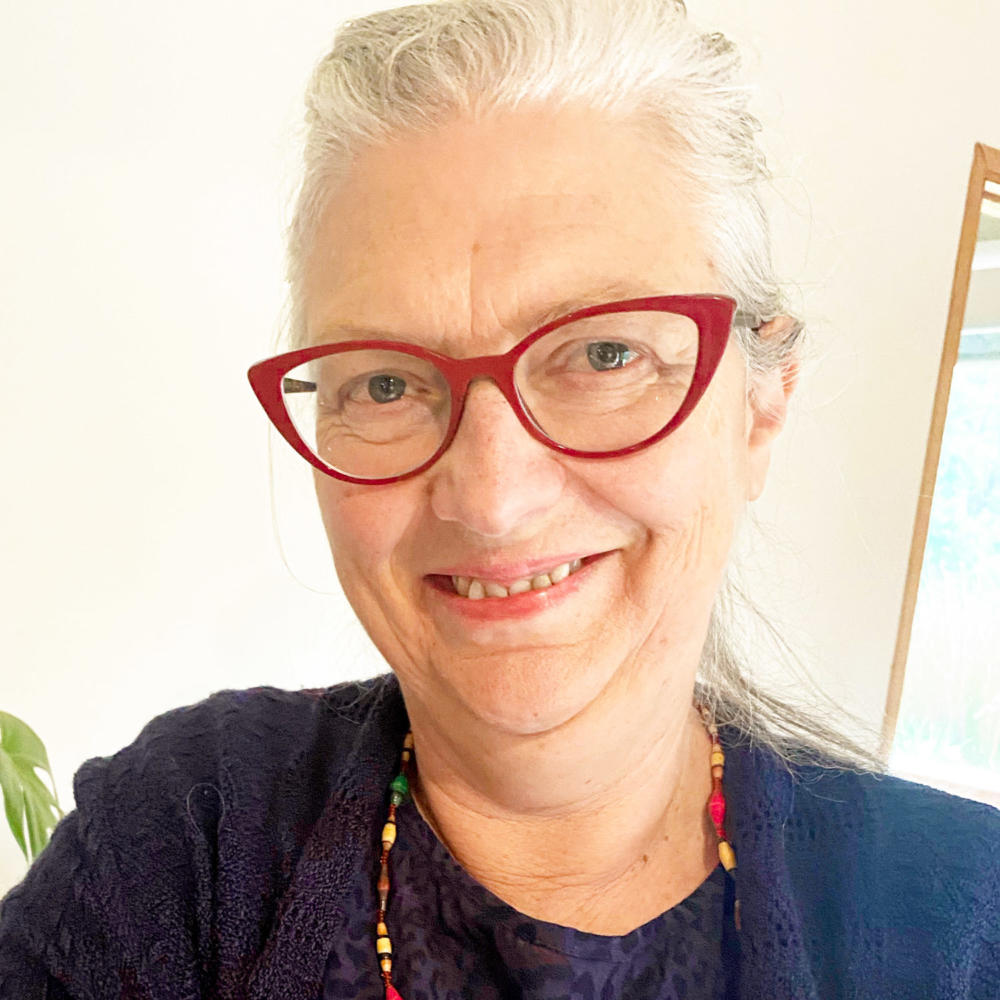
New country representative Jane Bradshaw
Since August Jane Bradshaw has been representing the Anthroposophical Society in Australia. The nurse specialising in liver disease completed her training in anthroposophical nursing in New Zealand and has experience as a playgroup leader, nursery school assistant and committee leader.
Sebastian Jüngel What distinguishes your country?
Jane Bradshaw Due to its vast openness Australia has the lowest population density in the world - only three people per square kilometre. The vast distances result in many remote communities.
Australians form one of the most ethnically diverse societies in the world today with roughly 24 million people. We came as free settlers and convicts, immigrants and refugees. Australians are known for their laid-back and relaxed attitude to life and their love of the outdoors.
Our sunburned country spans 7.7 million square kilometres of land mass and is prone to natural disasters of floods, drought, and fires. Climatic zones range from tropical rainforests, deserts, and cool temperature forests to snow covered mountains, diverse and sometimes deadly animals.
Changeable weather patterns mean one day a warm north breeze and people go to the beach and the next day a southern storm brings snow to the mountain peaks.
Cultural healing
Jüngel What role does the traditional spirituality play in Australia?
Bradshaw I acknowledge the Aboriginal peoples and their deep connection to the land and water and to the plants and animals and to spirit. Their stories of creation – often beautifully expressed in their song, dance, and art – offer a link to their dream consciousness. They describe themselves as the longest living continual community. Today they are making up 2.4 per cent of the total population. Their ‘elders’ are ‘respected' persons of any age within the Aboriginal community who have the trust, knowledge, understanding and permission to speak about culture.
Australian people are in the beginning stages of building respect and of bridging the gap between mainstream popular thinking and the culture of the aboriginal peoples and their spirituality. Grappling with the history of brutal colonialism, unfinished business of past hurts and continued inequity slow the way. The Anthroposophical Society welcomes the opportunity for the sharing of all stories and wisdom toward cultural healing.
As a national society with a global stand, the Anthroposophical Society must courageously stand for human dignity shaped by spiritual insights. Steiner’s insights into planetary development and human evolution of consciousness deserve deep research. Sharing the unique expression of the southern hemisphere is an investigative point for me.
Freedom from past trauma
Jüngel You are working with patients suffering from liver disease – by letting them tell their stories. How did you come to this kind of therapy?
Bradshaw I myself have had a colourful biography that involved personal trauma and rich awakening. I discovered my freedom, and my courage to embrace a new future was stimulated by the deep listening of friends and professionals. This was my way to provide a non-judgemental listening environment for my patients.
For in my nursing work, I meet many patients who have experienced trauma: neglect, abuse, incarceration, and addiction are common. Many have suffered stigma and discrimination in community and within bureaucracy. Their resignation and fear of their diagnosis and health prognosis are apparent. I consider part of my role is to bring my inner attitude of love and provide a safe space for them to share their life stories.
Jüngel What makes talking in form of stories therapeutic?
Bradshaw Many are speaking openly for the first time. This is sometimes a cathartic experience. As a therapist, my intention is to enable some inner freedom from the past trauma and strengthen the will forces for healing. The smallest deed that is connected to the highest ideals serves the other and humanity. Never underestimate your contribution as a human being (we are all healers or therapists).
Jüngel Which story can be told about the Anthroposophical Society in Australia that is healing for Australia?
Bradshaw Recently the Australian Anthroposophical Society branch representatives and the management committee collaborated to bring our society to an enhanced way of consciously working together. One of our questions is: how do we recognise the individual needs of each member and as a group and simultaneously encourage collaboration, consistency, and community building for the common good? This work will serve us for the future as we connect willingly and out of love of our spiritual integrity. We named nine actions to guide us: work collaboratively, live with warmth of heart, listen deeply, realize spirit, develop trust, practise honesty, commit to self-development, have courage to act and be grateful.
Stepping into the unknown
Jüngel How will you work as General Secretary – to achieve which aim?
Bradshaw I commit to consulting widely and often with members and initiatives. Horizontal and shared leadership roles are co-created together. I recognize I must honour the past and be fully present in the moment to be open to what the future is calling. I am stepping into the unknown.
I trust my daily meditative practice and the indications given by Rudolf Steiner will guide my way as I strive to do the good.