
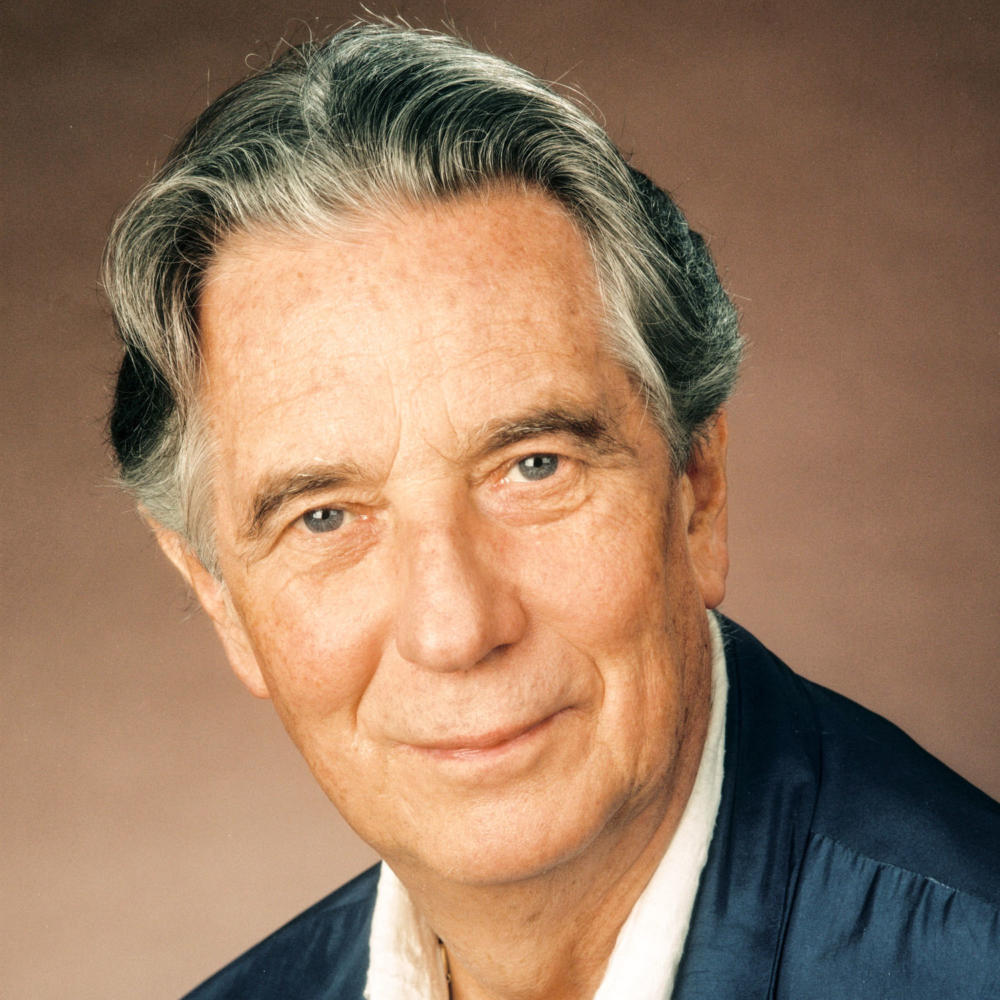
Peter Tradowsky
Peter Tradowsky was born in Berlin (DE) and remained active there throughout his life. Even his childhood seems to have prepared him for his connection with Rudolf Steiner and anthroposophy.
Experiences during the war awakened in him an interest in a deeper understanding of human nature. His mother took him to the Christian Community where, in the confirmation lessons, he heard the story of Parsifal in which he found the foundation of his life.
He studied German and Geography at Berlin’s Freie Universität, hoping to become a Waldorf teacher, a decision that was reinforced by his experience of the state school system. For many years he worked as an upper school teacher and bursar at the Berlin Rudolf Steiner Schule. He was one of the founders of the Berlin Arbeitszentrum (anthroposophical centre) and was later put in charge of the Rudolf Steiner House building project in Berlin. He went on to become one of the main active contributors at the Arbeitszentrum. His lectures in Berlin and other cities will not be forgotten, above all his annual reviews on New Year’s Eve.
Conveying anthroposophy
As a Class Holder in the School of Spiritual Science and leader of work groups and seminars Peter Tradowsky helped many people to deepen their knowledge of anthroposophy. In the gdr and later also in the new German States he did much to support the anthroposophical work, especially within the School of Spiritual Science. He was always happy to accept invitations to give lectures and seminars in other countries, offering regular work groups in Paris in particular.
Based on spiritual science, Peter Tradowsky undertook and published extensive research on the destiny of Kaspar Hauser and on questions regarding Czar Dmitri and the two Johns. Further publications, some of which were translated into other languages, focus on urgent questions of our time. He was truly a man of his time, who deeply and actively connected with the requirements of practical life.
Fostering the Christ impulse
The spiritual communion with Christ, the fostering of the Christ impulse, was Peter Tradowsky’s goal in life, which carried him through challenging times when he was faced with defamation and hostility. He had studied the questions of the phantom body addressed by Rudolf Steiner in the Karlsruhe lecture cycle From Jesus to Christ (GA 131), when the appearance of the stigmata and the consequent changes in the physical body functions of his co-worker at the Rudolf Steiner House in Berlin confronted him with a life-changing event that brought up many questions. Faithfully and lovingly he supported Judith von Halle, her destiny and her spiritual scientific work.
His love and goodness – and not least his care for Mother Earth – are signs of a humanity that is often lost in the busy lives we lead today. To overcome the «inertia of the heart» (subtitle of Jakob Wassermann’s Kaspar Hauser novel) was one of Peter Tradowsky’s main concerns. To the very end he was filled with deep gratitude for the diversity of encounters and events that life had granted him.