
School of Imagination
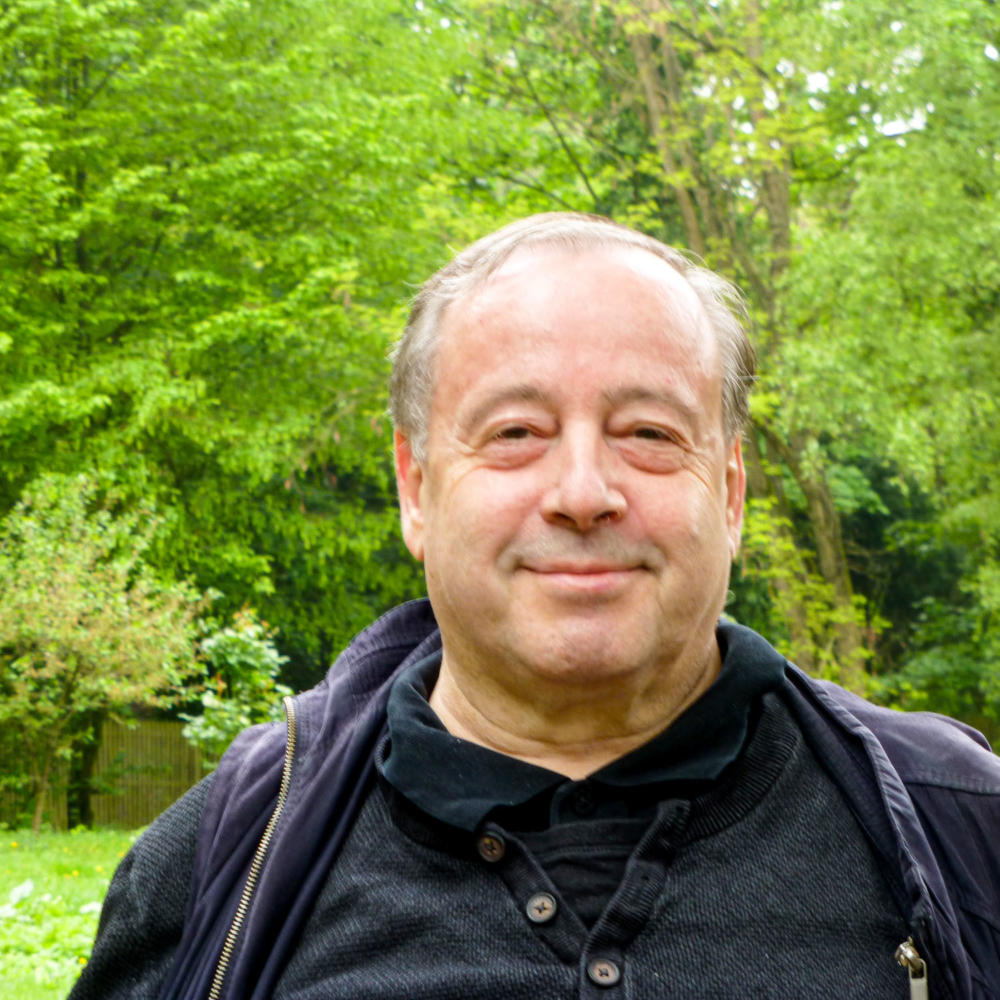
Klaus Hartmann’s Albert Steffen biography, from the writer’s birth in 1884 up until 1919, has been long in coming. Both Hartmann’s interest in Albert Steffen and his biographical connections with one of the places where this close co-worker of Rudolf Steiner’s used to live helped him to study and partly document countless personal testimonials.
Sebastian Jüngel Where does your interest in Albert Steffen come from?
Klaus Hartmann I was particularly interested in Rudolf Steiner’s closer co-workers: Marie Steiner, Ita Wegmann, Guenther Wachsmuth and others; one could find things to read about all of them, with the exception of Albert Steffen, and that has concerned me for a long time – more than thirty years. I had heard lectures by Sophia Walsh on Albert Steffen’s plays for many years and had also read them myself. What struck me most was that he seemed to have his own access to the world of imagination, in other words, he had the faculties that Rudolf Steiner had spoken of. Steffen himself provides evidence of this in his work; it is like a school of imagination.
But I also discovered Steffen through Herbert Witzenmann, whose conferences in Dornach I had started attending in 1978. The Albert Steffen Foundation became aware of me because of the two-volume biography I wrote on Herbert Witzenmann and they asked me eventually if I would take on a biography of Albert Steffen. But my interest in Albert Steffen’s life situation was also kindled by accounts from and shared excursions with Heinz Matile, Ursula Kehlert and others.
Ever new perspectives
Jüngel What is it that fascinates you about Albert Steffen?
Hartmann His descriptions. In his very first novel – Ott, Alois und Werelsche – his descriptions conjure up long-forgotten scenes from my own childhood and youth that then confirm his experience in wholly unexpected ways. His journal from his Munich days (DE) was also very inspiring: I visited all the places I had experienced myself in the mid-1970s without knowing Albert Steffen. At the time, I knew nothing of anthroposophy, reincarnation and such things, but I wondered why a small cemetery and the area around it seemed so familiar when, as a student, I sold newspapers in Munich’s borough of Schwabing. The cemetery is across the road from the premises used at the time for branch meetings by Sophie Stinde and Pauline Kalckreuth. I was able to experience Munich a second time with Albert Steffen.
Jüngel How has your image of Albert Steffen changed since you published the first volume of his biography?
Hartmann This happened outwardly as I got to know the biographical foundations of his novels, novellas and myths. Everything he writes is connected and describes his life and life conditions from ever new perspectives. But I was also convinced that Rudolf Steiner’s reference to Giotto was not all he said about him. And I found it intriguing that, in Munich of all places, in his presentations on the Fifth Gospel, Rudolf Steiner spoke for the first time of things he had not touched on before in these lectures. Might he have responded to his listeners, as has always been assumed?
Still unresolved
Jüngel What is your view of Albert Steffen now? Are there ways of healing old ‘divisions’?
Hartmann I am not so sure yet. The period between 1920 and 1925 – when Steffen actually worked with Rudolf Steiner in Dornach and elsewhere – is an overwhelming image for me that still needs to be processed. But that is precisely what makes that period so immensely interesting. After Rudolf Steiner’s death the nightmare began, the fight of all against all. That, too, is an interesting time of which I have no clear picture yet. Albert Steffen’s depressive basic attitude makes this more difficult; the melancholy he often puts into words. But this underlying mood does not necessarily have to colour his judgment. His poetry, too, is often free of what he addresses in his journal.
Jüngel What questions are topical now in your Steffen research?
Hartmann I’m focusing on the crucial periods I already mentioned, the cooperation with Rudolf Steiner, issues they discussed, such as the reasons for Friedrich Schiller’s death and Roman Boos’ illness; the background of the articles published at the time in the Goetheanum journal, for which both Albert Steffen and Rudolf Steiner were responsible. When, just before Rudolf Steiner’s death, Walter Johannes Stein wrote a longer article about Alexandria, one can’t help thinking of questions regarding Alexander the Great and matters that are still unresolved.
Honest with himself
Jüngel How do you deal with being confronted with private documents?
Hartmann Thankfully I am not in the same situation as Emanuel Zeylmans who published Rudolf Steiner’s letters to Ita Wegman. But many facts concerning the Futurum Company that Albert Steffen wrote about in his journal are private, too, and one is still shocked today at how the money of the anthroposophical shareholders was used.
I am nevertheless in favour of speaking openly about many things that have been kept quiet for decades. The same is true for the personal relationships between Rudolf Steiner, Marie Steiner and Ita Wegman – if one does not want to find out about them from Helmut Zander.
Jüngel How has Albert Steffen changed you?
Hartmann I would say fundamentally, considering that I owe him crucial insights into myself, too. The fact that he kept an ongoing journal and his honesty with himself are also helpful.
Book Klaus Hartmann: Albert Steffen. Die jungen Jahre des Dichters [Albert Steffen. The writer’s youth], Verlag für Schöne Wissenschaften, Dornach 2020