
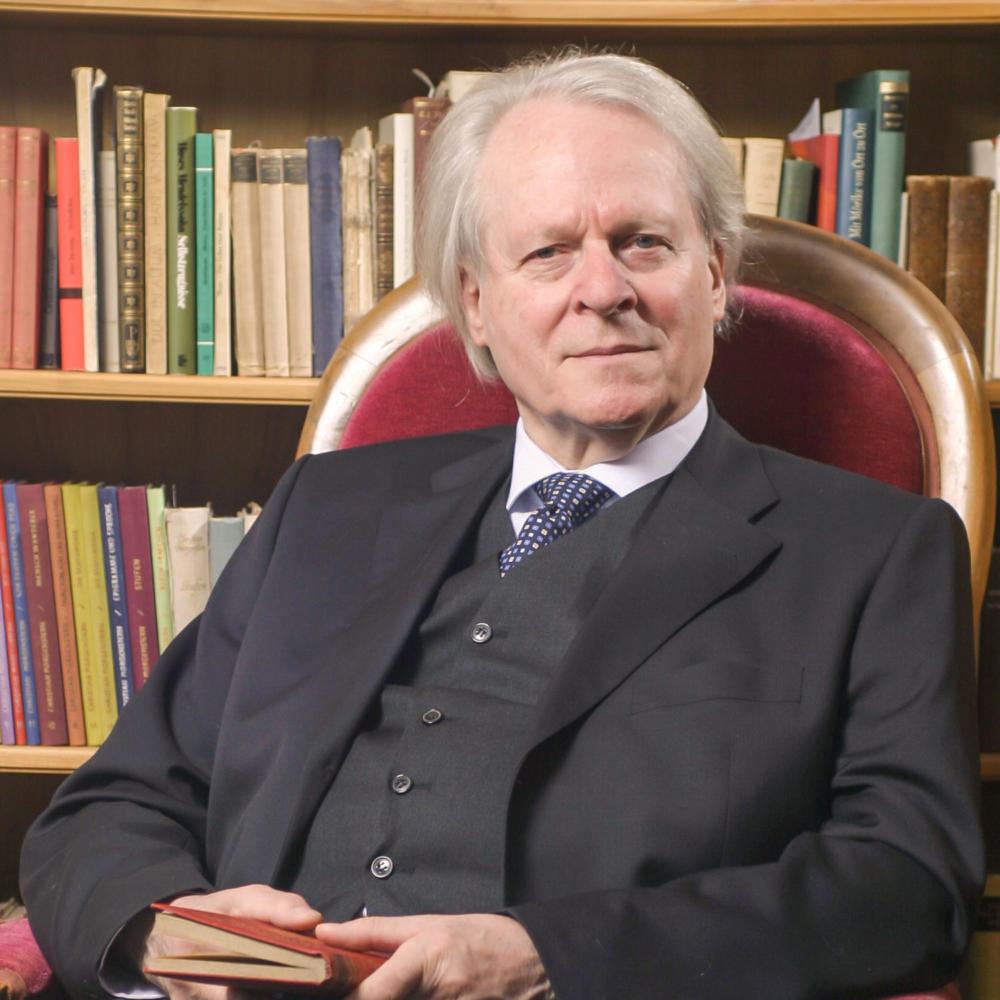
Wilfried Hammacher
As a Class 12 student at the Uhlandshöhe Waldorf School in Stuttgart (DE), Wilfried Hammacher had a crucial experience during an anthropology main lesson taught by the school doctor, Gisbert Husemann: humans have not descended from animals, but animals from humans.
Drama and poetry
Once graduated from school, Wilfried Hammacher studied eurythmy with Else Klink (DE) and speech in Dornach (CH). In Rudolf Steiner’s Mystery Dramas at the Goetheanum he played Doctor Strader. One of the first plays he directed was Shakespeare’s The Tempest. In 1970 he founded the Novalis Stage and the Novalis School of Speech and Drama in Stuttgart (DE). The stage ensemble travelled extensively in Germany, bringing a lively and youthful approach to Rudolf Steiner’s Mystery Plays.
In 1973 Gisbert Husemann and Wilfried Hammacher introduced the first sculpture, music and speech course in Stuttgart, working together with Maria Schüppel (music) and Else Klink (eurythmy): a fact would first be examined through anatomy, based on Goetheanism, then through sculpting in order to explore the ether body, through music to get to know the astral body, and through speech so as to study the ‘I’ organization.
Wilfried Hammacher later wrote plays on reincarnation. In Born Again he dramatized Rudolf Steiner’s karmic research into Carl Ludwig Schleich and August Strindberg. In Raphael and the Human Being, Raphael’s message to human beings unfolds with reference to Rudolf Steiner’s Easter Imagination. His Uriel Hymn about the events surrounding St. John’s tide is musically uplifting. Towards the end of his life he mostly wrote hymns, for instance about Novalis or Leonardo da Vinci. His final work was on the Seven Words of Christ on the Cross.
In-depth study of the Mystery Dramas
Wilfried Hammacher wrote guidelines to Rudolf Steiner’s Mystery Dramas. In his monumental work on The First Performance of Rudolf Steiner’s Mystery Dramas, which includes documents on locations, actors, rehearsals, performances, costumes, masks, stage props and lighting, he was able to express his love of theatre down to the smallest detail. He furthermore wrote a biography of Marie Steiner.
Goethe’s Faust parts 1 and 2 were equally important to him. He produced individual scenes of this play in Munich (DE) in 1979 and the entire opus at the Goetheanum from 2002 to 2004.
His wife Silvia supported his creative endeavours and initiatives over decades, taking part in them as a eurythmist and actor.
Wilfried Hammacher’s works have been translated into Romanian and are performed regularly in Bucharest. His achievements continue to radiate out into the world.