
Age is a task for society as a whole
Due to the likely age increase in many societies, a considerably higher proportion of people in need of support is to be expected in the future. According to internist Christian Schikarski, who heads the Care Group on Age Culture and Geriatric Medicine within the Medical Section at the Goetheanum, thinks that this cannot be solely a matter of individual responsibility. He therefore calls on policymakers to provide both information and training and care programmes.
Due to the demographic development in countries such as Germany, few young people will soon face a majority of elderly people in society. Christian Schikarski, an experienced geriatric doctor, thinks that this will result in conflicts among the younger generation, because young people will not only have to deal with their daily work and family, but they will also be responsible for the care of the elderly and those in need of assistance. Both generations have to live together although they come with very different life experiences: the war and postwar period on the one hand and the Covid pandemic on the other.
For Christian Schikarski it is therefore essential that both private individuals and professional caregivers are trained in how to support the elderly. In addition to increasing physical frailty, mental and cognitive processes also change with advancing age. Some of these changes can be mitigated through strength and co-ordination training, and the risk of falls – and consequently, broken bones or surgical procedures – can be reduced. But a lower metabolic rate and reduced regenerative forces alongside bodily changes with a decrease in muscle mass, increased fatty tissue and reduced body fluid lead to a risk of adverse drug reactions. This means that special attention needs to be given to drug therapy plans and dosage.
Independently of this, memories may resurface that had previously been suppressed, triggered by nothing more than a light touch, a cold washcloth, a word, a meal or a scent. “How do we deal with this as caregivers today,” is Christian Schikarski’s question. He has had positive experiences with taking the time to pause and listen. However, trauma-related psychotherapy is also necessary in some cases.
It is important to Christian Schikarski that the abilities of elderly people are not approached in a deficit-oriented way. While they have to learn to cope with such limitations, elderly people’s life experience and maturity can benefit the people around them. And it is certainly possible to lead a fulfilled life even under limited conditions. A spiritual understanding of the human being certainly helps, but making such a different approach possible requires a society-wide effort.
English by Margot M. Saar
Article (in German) Christian Schikarski: Age Culture and Geriatric Medicine, Der Merkurstab 2/2026
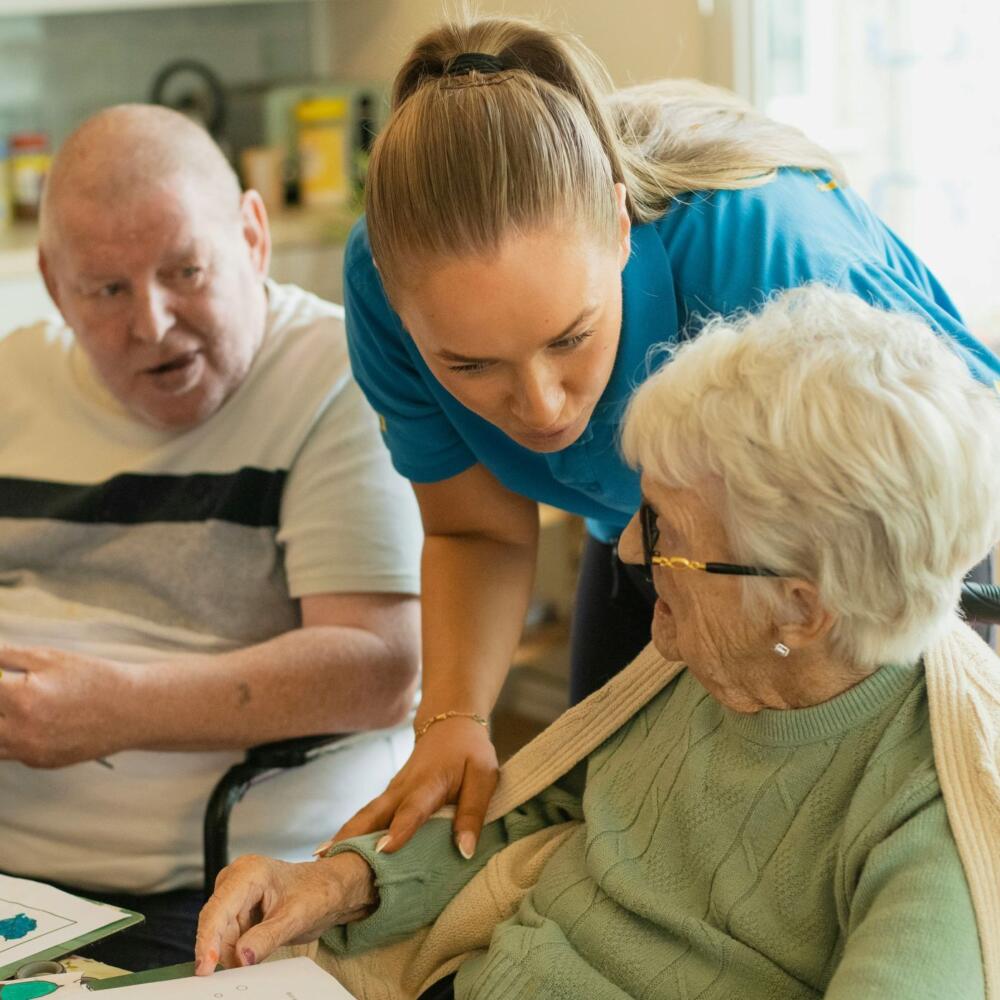
Generic image Elderly care (Photo: Age Cymru / unsplash)