
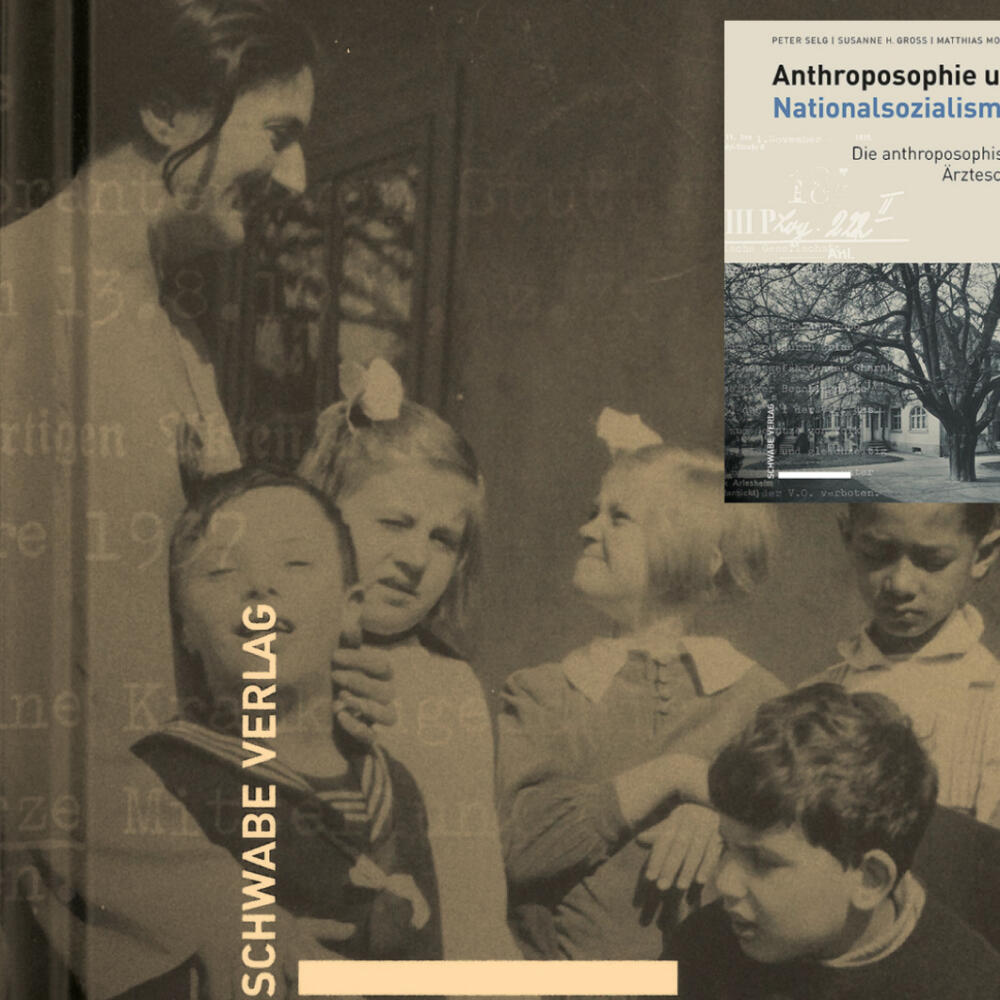
Between conformity, collaboration and resistance
Documents from over 300 international, national and regional archives, private estates as well as archives of companies and institutions allow for a nuanced reassessment of the history of anthroposophic medicine, pharmacy, supportive education and psychiatry between 1933 and 1945. The stance taken by their representatives was individual, ranging from conformity to collaboration and resistance, both active and passive.
In the context of the anthroposophic physicians (over 631), the supportive education community (around 300 people) and those in their care (over 800), as well as the patients at Wiesneck Sanatorium (1,500 patient records), the following observations stand out: Ita Wegman’s early recognition of the threat posed by totalitarianism; the efforts made by Friedrich Husemann’s Wiesneck Sanatorium community to combat forced sterilization and potential deportations; the secret activities of the supportive education homes to protect children and young people under threat; and across all fields of work the consistent support for Jewish colleagues. Fewer than 15 per cent of anthroposophical physicians were members of the Nazi Party – compared with over 40 per cent of the rest of the German medical profession. Short biographies of anthroposophic physicians and special needs educators with a Jewish background document previously unknown stories of flight and networks of helpers.
Despite their categorical rejection of anthroposophy, leading National Socialists such as Otto Ohlendorf, Rudolf Hess, Alfred Baeumler and Wilhelm Canaris supported anthroposophical institutions for various reasons. They supported their continued work because they were keen to utilize their approaches in various spheres of life for the benefit of the National Socialist state, albeit separated from anthroposophy. Or because they knew that their own children or relatives were well cared for in anthroposophically-oriented care homes. Without this ‘protection’, anthroposophical institutions such as the Wiesneck psychiatric sanatorium near Freiburg, Germany, and the three (out of originally seven) anthroposophical supportive education homes still operating at the end of the war would not have survived the Nazi regime.
The anthroposophic pharmaceutical company Weleda and the anthroposophic pharmacist Rudolf Hauschka (Wala) were able to continue operating until the end of the war despite numerous restrictions and interventions in their businesses. They also made numerous compromises and adjustments for this but maintained the anthroposophical identity and quality of their work.
The study on ‘Anthroposophic Medicine under National Socialism’ was commissioned in 2014 by the Academy of the Society of Anthroposophic Physicians in Germany. It was supported by a scientific advisory board that included specialist medical historians Thomas Beddies and Heinz-Peter Schmiedebach from the Institute for the History of Medicine and Medical Ethics at the Charité in Berlin (DE). The work was funded by the Mahle Foundation, the Software Foundation, the Christophorus Foundation, the Hauschka Foundation and the Rudolf Steiner Fund for Scientific Research (all in Germany), as well as the International Friends of the Ita Wegman Institute, Arlesheim, Switzerland.
The authors of the study are Peter Selg, a specialist in child and adolescent psychiatry and Professor of Medical Anthropology and Ethics, director of the Ita Wegman Institute and co-leader of the General Anthroposophical Section at the Goetheanum; the historian Susanne H. Gross, whose research focuses on Jewish victims of National Socialism; and the historian and freelance journalist Matthias Mochner.
English by Margot M. Saar
Peter Selg, Susanne H. Gross and Matthias Mochner: Anthroposophische Medizin, Pharmazie und Heilpädagogik im Nationalsozialismus 1933–1945, Schwabe-Verlag, Basel. Volume 1 Die anthroposophische Ärzteschaft [anthroposophic physicians], 2024 Volume 2 Weleda und Wala – die anthroposophischen Arzneimittelfirmen [the anthroposophic pharmaceutical companies] 1933–1945, 2025 Volume 3 Anthroposophische Psychiatrie und Heilpädagogik [anthroposophic psychiatry and supportive education] 1933–1945, 2026