
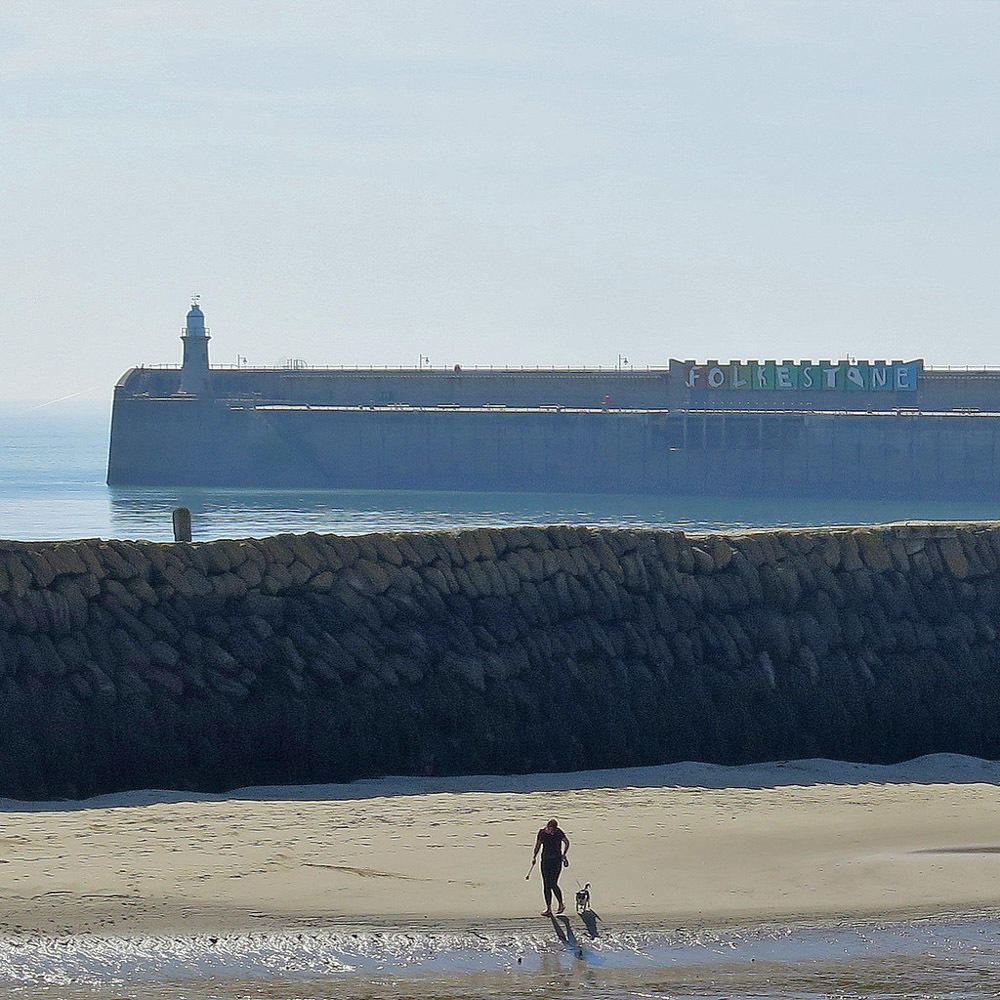
Folkestone Festival
In late June, the 19th Annual Meeting of the Economics Conference of the Goetheanum, part of the Social Sciences section, took place in Folkestone (GB) as part of a series of events to mark the consequences of reparations after the First World War.
Folkestone has deep history with the immediate aftermath of World War 1 and its ‹twin›, the Treaty of Versailles, that carved the world up along false lines, setting the stage for the chaos that has reigned ever since. Folkestone has deep links to these events, having been the point of departure for millions of soldiers to a war audible if not quite visible across the Channel, and the venue for the subsequent reparations discussions at nearby Port Lympne.
In a performance of a short play, «An Improbable Conversation», Maynard Keynes hosted a meeting between Woodrow Wilson and Rudolf Steiner. Wilson read out his 14 Points, to each of which Steiner gave a Riposte, being one of his 14 economics lectures distilled to the exact word count of Wilson’s Points.
The Economics Conference meeting itself was based in the Grand Hotel, a quirky venue made famous by the residency there of Edward VII’s court. We deliberated on many topics, including the discovery by ‹Folkestone hero›, William Harvey, of the circulation of the blood and the potential analogy this provides for understanding the circulation of capital.
Hoping for a second chance
After the meeting, Christopher Houghton Budd gave a public talk on forgiveness and the reconciliation of the English and German folk souls. This was followed by a second talk on the idea of a European Confederation as an antidote to Folkestone’s Brexitism and xenophobia.
The final event was the signing of a contract for an installation of 12 light posts (‹The Ring of Light›)as part of next year’s Triennial and in an area that could in due course become a new town plaza.
All of these events seemed to give credence to the idea that there could be, indeed is, a Second Chance for the World, if even a few people were to seize the present moment, if only at first by marking it.