
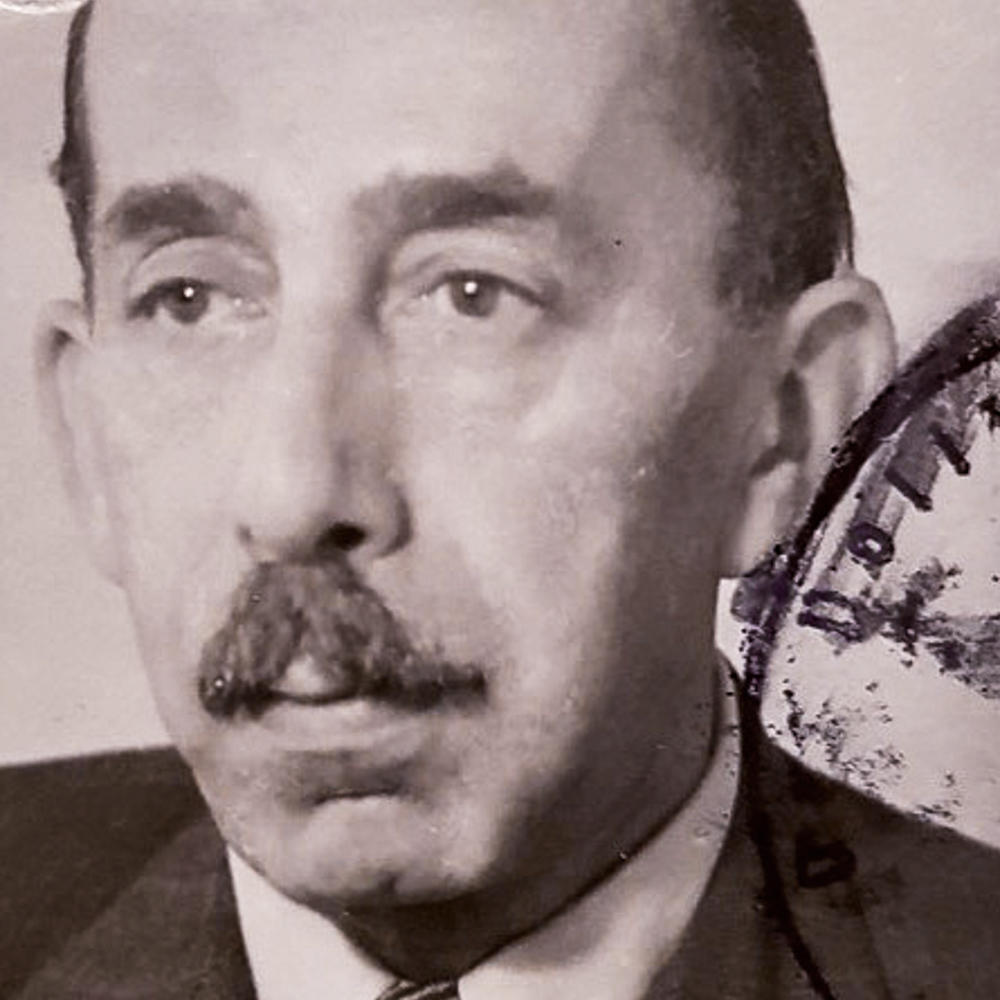
Hans Specht
During her research into Rudolf Steiner’s youth Martina Maria Sam discovered that the young Hans Specht was the first child to offer Rudolf Steiner the opportunity to study the first seven-year period.
In the autumn of 2018 I continued to work on my biography of Rudolf Steiner’s youth. The first volume of this book, Rudolf Steiner. Kindheit und Jugend (childhood and youth) goes up to the year 1884, the second volume will cover the years 1884 up until 1890. When I looked in more depth into the history of the Specht family in preparation for the second volume I realized how important a role not only Otto Specht but also his cousin Hans Specht played in Rudolf Steiner’s life.
A «cheeky» boy
Hans Specht (1885–1953) was born a few months into Rudolf Steiner’s occupation as tutor in the Specht household. He was the first and only child whose development Rudolf Steiner was able to observe almost daily from birth until his sixth year. Many of his insights into child development in the first seven-year period are owed to his observations of little «Hansl». The foundations of the second and, later, third seven-year period he was able to study with Hans’ cousins Richard (13), Otto (11), Arthur (9) and Ernst (6).
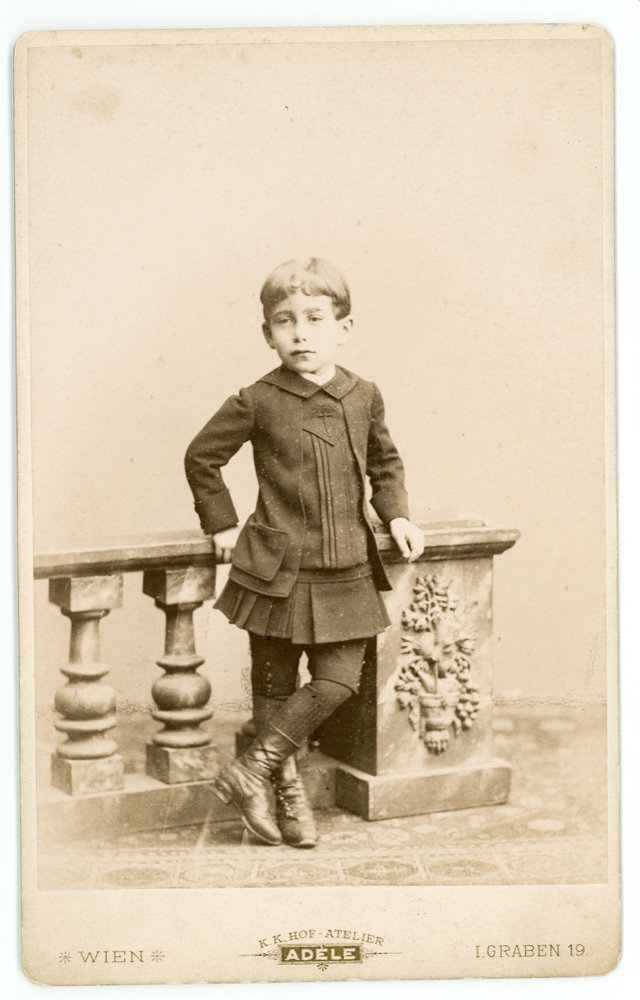
Hans was a somewhat indolent, «cheeky» boy. Rudolf Steiner liked him very much and mentioned him in his lecture to the future Waldorf teachers on 29 August 1919. The small glass of red wine prescribed by a physician for Hans because of a constitutional weakness led to his later nervousness as an adult (GA 116, lecture of 22 December 1909) – a consequence that has also been observed in other children.
Imagine my frustration at not being able to find out more about Hans’ later destiny, apart from the fact that he emigrated to Sydney in 1939. But by a lucky coincidence, I met the Australian curative teacher Peter Rathjen in the Rudolf Steiner Archives in Dornach (CH) in October 2018, whom I asked for help with finding out more about Hans Specht’s life in Australia. Peter revealed astonishing information that allowed me to trace Hans’ biography, two times 33 years after his death.
Emigrating to Australia
According to Rudolf Steiner Hans Specht was a mediocre pupil. Later he worked for many years as assistant manager in the European Central Bank in Vienna. Although he had left the Jewish faith in 1920, he lost his position in the bank in 1939 because of his Jewish background. The family therefore emigrated in the same year via London (GB) and Sri Lanka to Sydney (AU), where they changed their names and Hans and Maria Specht became John Peter Spence and Mary Ann Spence.
Since he did not find a position in a bank Hans Specht worked for a few years in the office of the Modern Hand-Weaving Company. On weekends he undertook boating and fishing trips for relaxation. During the early years of World War II the family was suspected of harbouring Nazi sympathies – letters and telegrams were intersected and the family was interrogated and investigated at least four times.
Hans Specht’s destiny as an emigrant reflects the tragic history of the twentieth century.
Sensory experience in young children
Sensory experience in young children is quite different from the sensory experience of adults in that it is entirely spiritual […] Only invisible spiritual beings associated with an ‹I› nature – that is spiritual beings from the human being up, but also the group souls of animals and elemental beings – make an impression on children. [...] and out of these spiritual forces, out of this immense spiritual dynamic, children form their second body from the original model. This second body grows gradually and is finally complete when the change of teeth occurs. This is the body that we build up after birth and it is the first body that is entirely our own: a physical body built out of the spiritual world.
Source: Rudolf Steiner, GA 318 (Pastoral Medicine), Lecture 4, 11 September 1924