
Making art visible
The Aenigma Archive for Anthroposophical Art, Architecture and Design in Berlin (DE) opened in 2016 (Anthroposophy Worldwide 3/2016). Since then it has been entrusted with tens of thousands of works by anthroposophical artists. The Havelhöhe community hospital in Berlin (DE) is exhibiting pieces from the Archive on its premises.
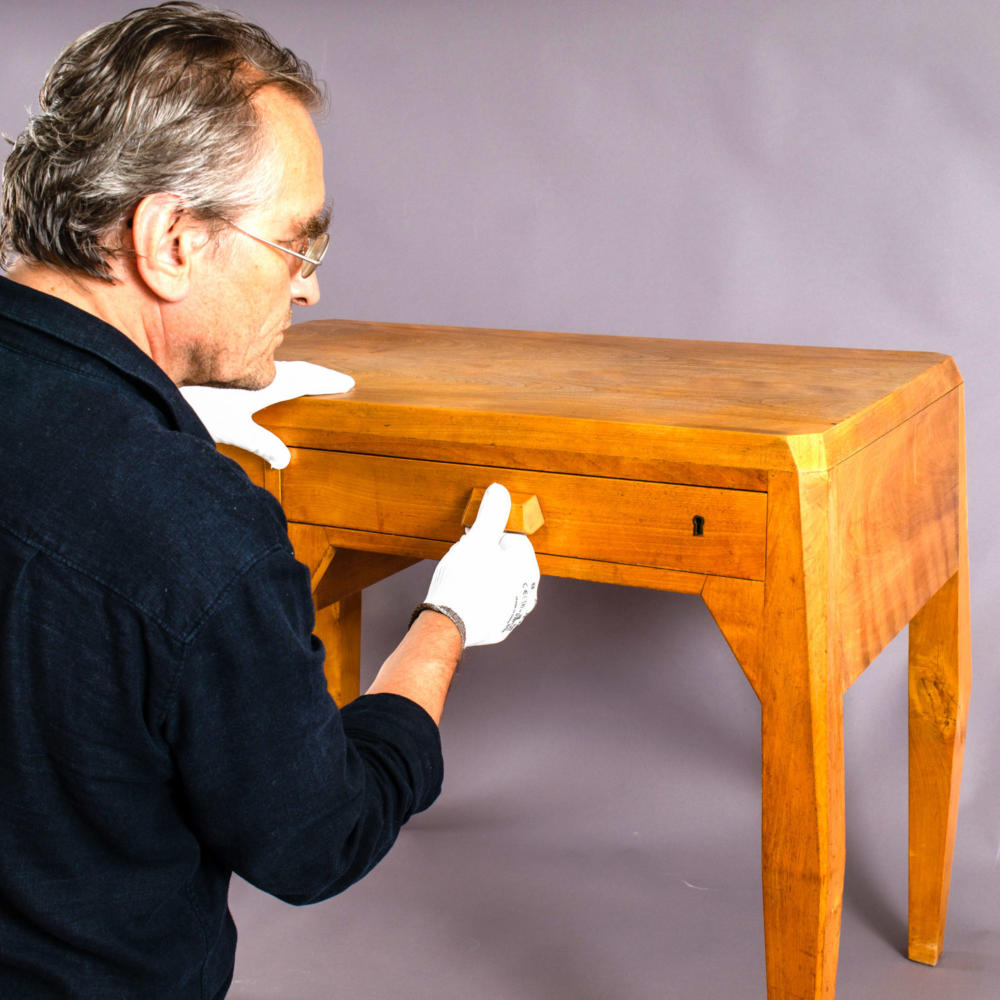
Every handover is a small miracle: it encompasses the trust placed in the Archive, the picking up and, not least, the inspection and storage of the work. Each work provides insight into creative biographies and working contexts that are waiting to be made visible.
Most recently, the Archive received over a hundred works by the artist Maria Hiszpanska-Neumann (1917–1980) and a large altarpiece by Max Wolffhügel (1880–1963). A comparison between this painting and another altarpiece from 1937 by Margarita Voloshina (1882-1973), which is also held in the Archive, is interesting in that it illustrates how differently one and the same theme can be realized.
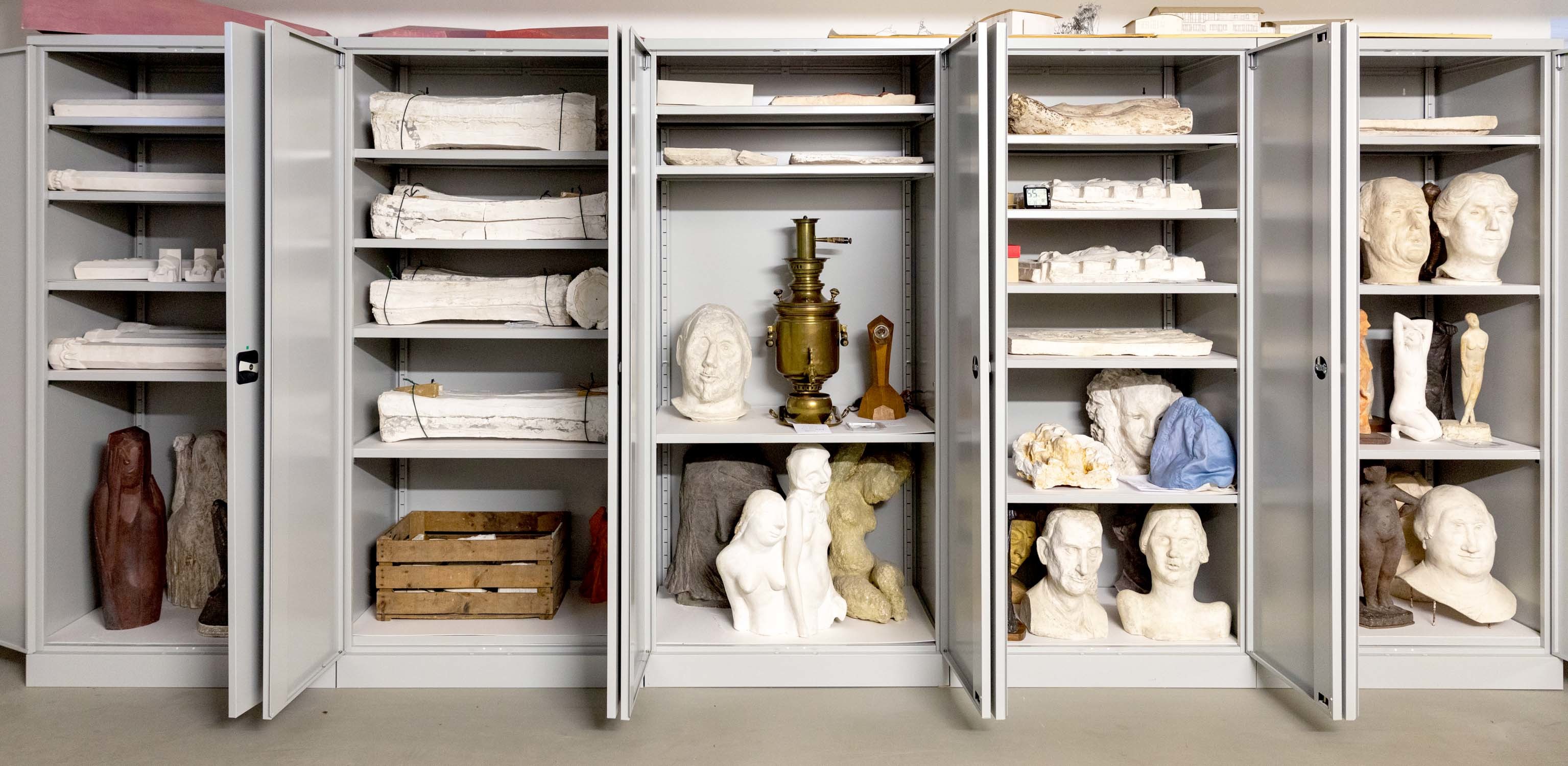
The art works entrusted to us are in very different states of preservation, with over half of the collection requiring conservational attention. And they need to be stored appropriately. The costs of all this by far exceed the funds available to us, since very few donations come with the funding required to give them the attention they need. The Archive takes up an area of 250 square metres in a building of the Berlin Kladow Waldorf School, which is very close to the Havelhöhe Hospital. The idea of a viewable ‘depot’ had to be deferred for reasons of space, due to the sheer number of art works we have received.
Criteria for acceptance
Works given to the Archive come with the expectation that they are appreciated and preserved as examples of anthroposophical art, both of which are guaranteed by the Archive as a not-for-profit institution. As per its statutes, it cannot sell any of the art works; nor does it buy art.
So far, all the work invested has been provided on a voluntary basis, except in cases where experts had to be consulted. We are looking to find a building in a central location in Berlin, where people can meet and engage with anthroposophical art on a daily basis.
What we offer is not past-oriented but intended to make the developmental potential intrinsic to anthroposophical art visible in the present, in the sense of a cultural impulse.
It seems a logical step and also one that is in keeping with the Archive’s objectives that the oeuvre of the artist Waldemar Volkmer can be exhibited for a longer period of time on one of the wards of the Havelhöhe hospital. Inquiries are underway for an exhibition of the work of Heinrich Röder in 2021.
Almost a hundred artists represented
To date, the Archive has received 65 donations, including both entire estates and individual works such as paintings, sculptures, architectural models, carved picture frames, furniture and metal objects. They come from Germany, Switzerland, Austria and Sweden, from artists including Eric Arlin (1924–1996), Oswald Dubach (1884–1950), Bernhard Eyb (1888–1978), Arne Klingborg (1915–2005), Felix Kayser (1892–1980), Roberto Hoffmann (deceased 1988) and Hans Nohl (1903–1999) – personalities who informed the development of art in the twentieth century, but also individual artists such as the Waldorf teacher Ewald Becker-Carus (1902–1995), or the biodynamic farmer Theodor Willmann (1902–2003), whose metal engravings feature Christological motifs.
The remarkable oeuvre of Heinrich Röder (1897–1954), one of the first estates received by the Archive has hardly been discovered yet. Then there is a sofa bed with integrated bookshelf from 1937, by the architect Helmuth Lauer (1901–1979).
The ‘nachlass’ (estate) of Waldemar Volkmer (1909–1973) with more than 1500 works, and the ‘vorlass’ (estate received from a living artist) donated by Karl-Heinz Flau (born 1930) with almost 1000 works are currently the biggest collections in the Archive, not counting the oeuvre of the colour artist Fritz Fuchs (1937–2018), which includes more than 30,000 objects, or that of the architect Winfried Reindl (born 1939) with more than 8,000 objects. Including artists who are not known or who are included in the more comprehensive estates, the Archive’s entire collection now comprises almost 100 individual artists.
Planned cooperation
Pending the necessary funding, we are planning to publish a series called Edition Aenigma, in which works and estates from the collection will be presented at irregular intervals by internal and external authors.
We believe that a building in Berlin devoted to anthroposophical art would constitute an essential contribution to the spiritual life and will therefore seek medium and longer term funding by collaborating with economic enterprises that are willing to support the Archive’s impulse. Visits to the Archive can be arranged by phone.
Support/ contact phone +49 30 440 46 9 10 (Matthias Mochner), +49 172 899 299 6 (Egon Tietz)