
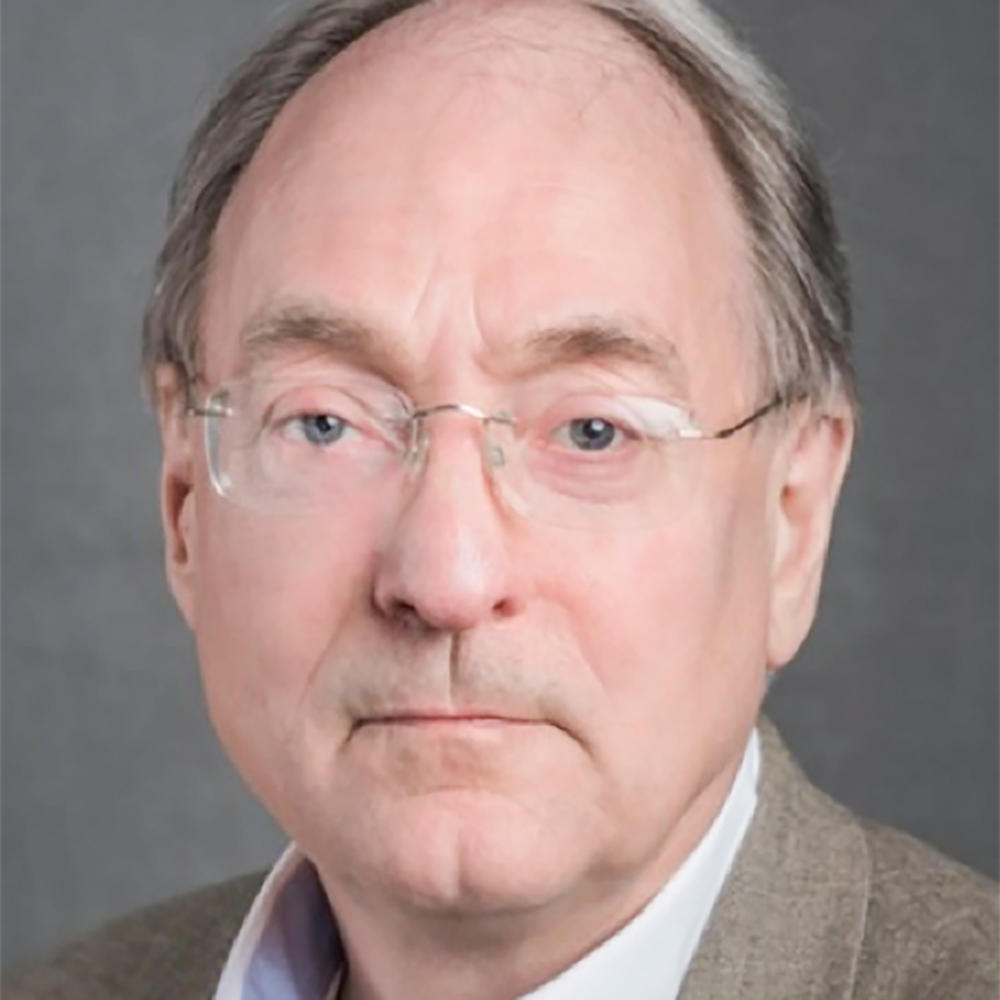
Maurice Orange
Maurice Orange was born in Amsterdam (NL) on 4 January 1953. His mother, a Dutch flight attendant who had grown up in Indonesia, brought Maurice and his two sisters up speaking Dutch and eating Indonesian food.
When their father, a British pilot, came home from his flights, they would change to English. A wild garden offered the opportunity to grow close to nature, climb high trees in strong winds, dig caves to ‘live in the earth’ and observe plants.
After school Maurice Orange was introduced to anthroposophy and the Parzival theme by Bernard Lievegoed. The experience of a young woman dying of leukaemia helped him find his vocation as a physician: he studied medicine at Utrecht University (NL) and worked as a GP in Amsterdam and Haarlem (NL), qualifying also in Anthroposophic Medicine. He learned about mistletoe therapy at the Zeylmans-van-Emmichoven Hospital in Bilthoven (NL). He realized that being treated with mistletoe stabilized patients and gave them a good quality of life, that it was important – as Diederik Houwert pointed out to him – to which organ and in what way the mistletoe extract was applied and that the study of immunological processes was crucial for the further development of mistletoe therapy.
Fever-mistletoe therapy
He and his wife, Bettina Lohn, met at the nursing home De Maretak (the mistletoe) (NL) and went together to join the therapeutic community at Park Attwood in Worcestershire (GB), where Maurice Orange worked for almost 25 years. In the mid-1990s he finally began to focus fully on mistletoe therapy: inspired by the research and clinical developments of the scientists and physicians at Öschelbronn (DE), he developed a new kind of high-dosage, combined mistletoe and fever therapy. He worked closely with this mentor Broder von Laue. As a result of his intensive study of mistletoe extracts and tumour immunology, and inspired by William Coley (the founder of oncological fever therapy), Maurice Orange was able to achieve tumour regression in individual cases by using his intensive mistletoe therapy. He devoted his Master thesis to this subject, completing an MSc in Clinical Oncology at Birmingham University (GB) in 2010. He published successful mistletoe treatments in international peer-reviewed journals. For him, the further development and scientific appraisal of mistletoe therapy was the most important aspect of his life’s work.
Subtle sense of karma
Maurice Orange always saw the individual person and was guided by his own will to heal. Those close to this researcher and physician could look over his shoulder, as it were, and see how he used science painstakingly in order to help his patients. Again and again he discovered and examined new phenomena, gradually growing to be an icon of modern fever-mistletoe therapy and an inspirational teacher.
Maurice Orange stood out for his modesty, his humanity, his sense of humour and his subtle sense of karma, his openness and never ending readiness to ask questions.