
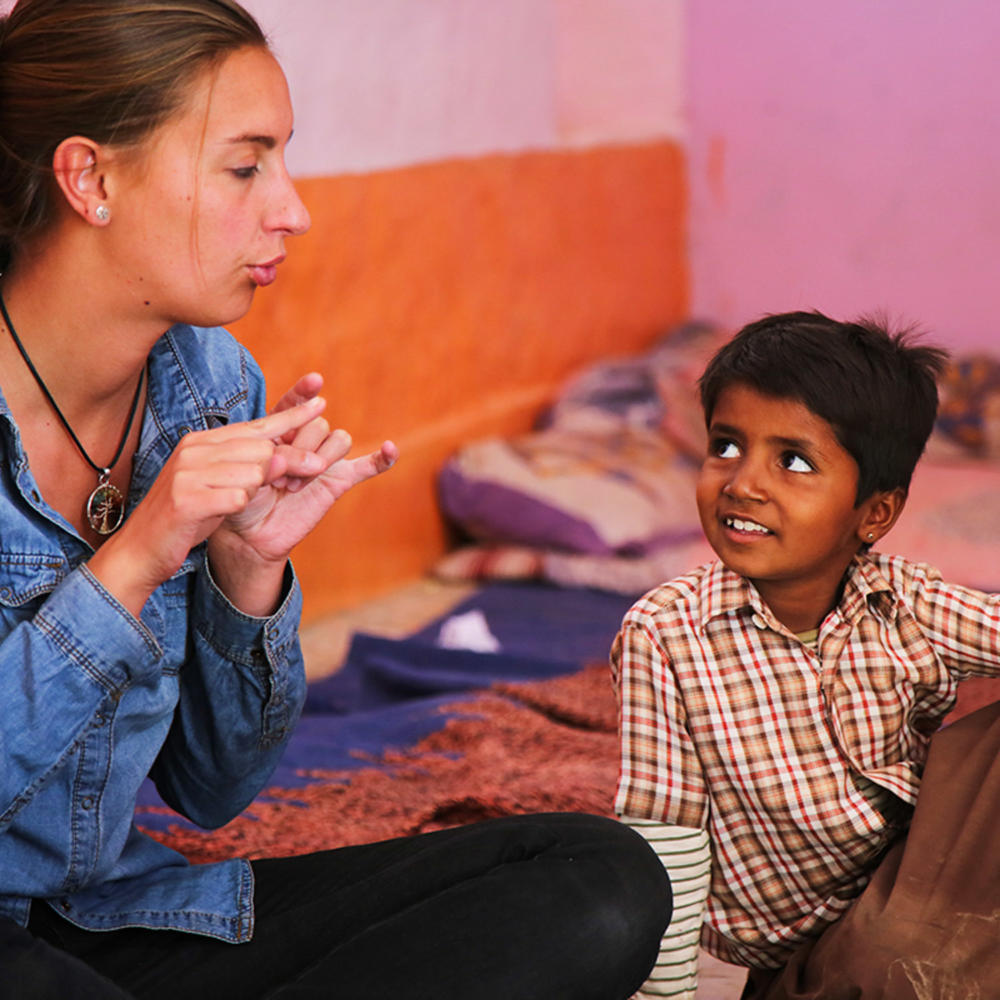
School instead of child marriage
The Darbari Waldorf School started in 2016 and offers 40 ‘untouchable’ students, aged 5 to 17, in four mixed classes the opportunity to have an education. Jacques Monteaux, the school’s founding teacher, taught in Waldorf Schools in France for 40 years.
Jean Pierre Ablard What is your personal background?
Jacques Monteaux In 2013, and with the support of the Friends of Rudolf Steiner Education, I started a project that had long been close to my heart: providing Waldorf Education to the children of one of the poorest and most ostracized populations in India – the Dalits or Untouchables. A former student of mine lived there and had already done some preparatory work …
Ablard What are the working conditions like?
Monteaux The project is located in the Thar Desert of Rajasthan, quite a harsh environment. This rocky desert with its scarce vegetation and extreme heat (between May and July, temperatures can reach 50 degrees Celsius) covers over 200,000 square kilometres of Rajasthan and adjacent Pakistan. The arid, sweltering and simple conditions and great poverty contribute to the austere character of our target group, the Bhil people. This ancient, now sedentary, tribe has preserved its connection with spirituality, a simple religiosity a far cry from the complexity of Hinduism. But their fatalistic belief in karmic law, the contempt poured on them by the higher castes in the name of Hinduism and their poverty have led them to experience an inner sense of resignation.
Dignity and freedom
Ablard What does this mean for the children?
Monteaux This remote region has an illiteracy rate of 70 percent. The children receive little education, only five percent finish school. For girls from the age of thirteen, school is the only alternative to an arranged marriage.
Ablard What is the school trying to achieve?
Monteaux It strives to bring back a sense of dignity to these people and to educate them towards freedom.
Ablard Are you successful?
Monteaux Parents increasingly withstand the pressure from families and traditions and allow their daughters to go through the school without getting married first. The children love the school. And we have had recognition from the local and national authorities: in 2019 I was granted an award for the best educational initiative in a rural region.
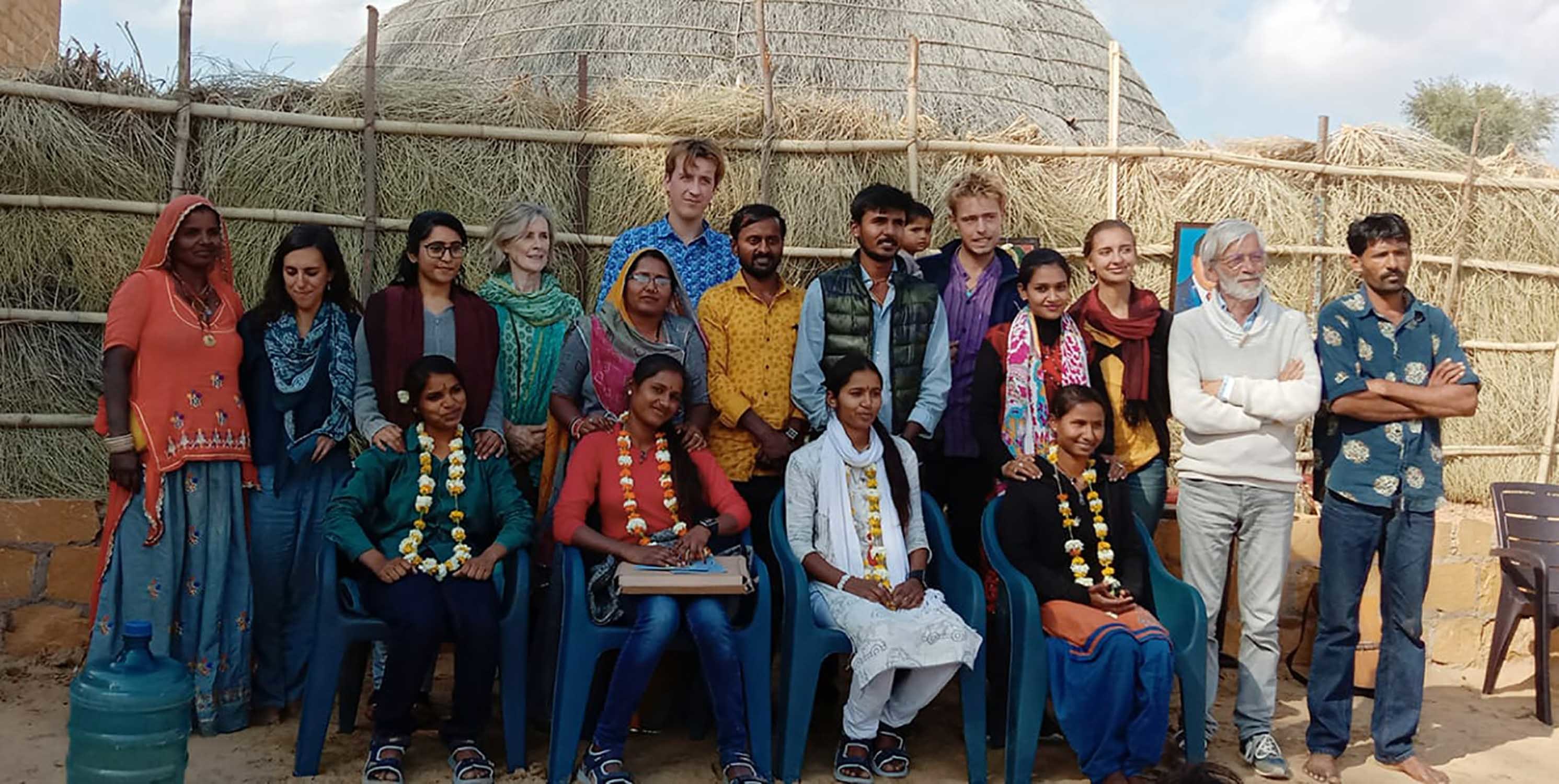
I live there eight months of the year, training four young Indian teachers. In the language lessons we have support from young German and French volunteers. Thanks to this diversity we speak several languages: Marwari (the local dialect), Hindi, English and French. I think we are under a lucky star.
Ablard There must be setbacks, I suppose?
Monteaux We were unable to prevent that two teenage girls were married off and taken out of school. It needs time for these traditional practices to change. Such setbacks teach us humility and perseverance.
Individual development
Ablard Has the pandemic reached the Thar Desert?
Monteaux It has hit India last spring, with cases rising exponentially. Schools have been closed since March 2020 – a disaster for children from poor and uneducated families. The pandemic provokes a return to old habits: many families are sending their children to work even though this is illegal. And the number of child marriages is going up, too, particularly in rural and poorer areas.
Ablard Does the West not have a kind of obligation towards India?
Monteaux India, one of the oldest human civilizations, has always been a source of spiritual inspiration for the West, answering to a longing in the human soul. Its culture has given us Yoga, meditation, Ayurveda and other things. But modern India is taking a different route. Rationalism and materialism have become more important and religious beliefs are seen as traditionalist, as something that is felt rather than consciously experienced.
Ablard What can Waldorf Education do to help?
Monteaux The interest and open-mindedness certain Indian groups bring towards anthroposophy and Waldorf Education arise from their approach of seeking to unite individual consciousness, freedom and spirituality. This development is essential to a deeply traditional society that is determined by the caste system. What we owe to India today is a contribution from the source of anthroposophy to the development of individuals as unique beings, independently of caste, gender, social status or religion!