
Ursula Jepsen
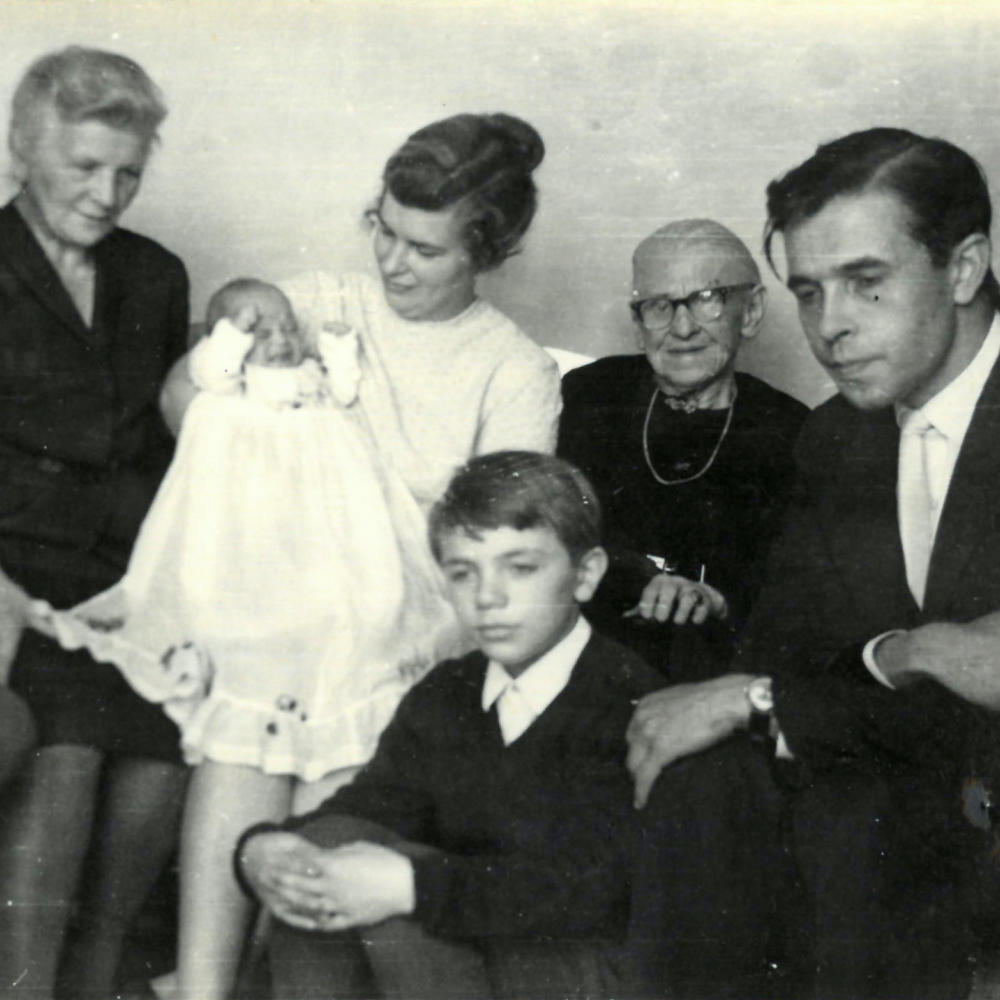
Everyday life makes history. Among Ursula Jepsen’s possessions was a Christening photo that showed her daughter and son, and to the right of them Rudolf Steiner’s former Berlin assistant Anna Samweber.
Governess at court
Born into the Dresden (DE) Wackwitz family in 1927, Ursula and her three older brothers grew up in Jena (DE), where their father was a town architect. After World War II she trained as a nurse in the Ibrahim Hospital, before her destiny took her to the court of King Farouk of Egypt, where she was governess to two children.
Having fallen in love with Ulrich Gutsch in Jena, however, she decided to cut her time in Egypt short and move to East Berlin (DE), where the couple got married. She was his assistant in what was then East Germany’s only anthroposophic doctor’s practice and grew healing plants among the ruins. The couple had a son and it was there that Ursula got to know anthroposophy and the Christian Community.
After the separation from her husband, they both entered into new relationships and Ursula’s daughter was born. As mentioned earlier, her friend Anna Samweber was present at the christening.
In order to earn a living Ursula Gutsch worked as a childminder in her own home, an activity she would later resume in Jena, having moved there to care for her mother. She never had to advertise as she was in high demand as a childminder; particular by artists who would rather have their children looked after privately than state-educated in socialist East Germany. She applied elements of Waldorf education and remained connected with the Christian Community, where a broad range of activities continued to take place even in GDR times.
Soon after the reunification of Germany she remarried at the age of 65. A time of travelling then ensued: to the North Sea, the Goetheanum and even to Spring Valley (USA) where she visited her daughter, a eurythmist. She and her husband were able to celebrate their silver wedding anniversary.
Close to nature
Ursula Jepsen had played the violin since childhood, she painted with water colours in Berlin, sang in choirs and attended opera performances and concerts, often with her adolescent daughter. She loved and protected every little plant in her garden, made spinach from nettles and gathered healthy seeds, which she used for seasoning salads. With her environmental awareness she was far ahead of her time: she collected the water from the washing machine for flushing the toilet and reused what she could in her household, including the envelopes of the Goetheanum journal.
Ursula Jepsen remained active, alert and vivacious right up to her death. She was much admired for walking almost an hour to the Christian Community chapel at the age of 93.