
From ‘It’ to ‘You’
The Covid-19 pandemic is part of the ecological crisis and reflects the troubled relationship that we as human beings have with the living earth. If we want to overcome the pandemic, we therefore need to ask about the essence of life and of the earth; and we need to take responsibility for our actions.
Medicine has never been as powerful technologically as it is now, and never before have so many economic resources been invested in it. At the same time, pharmaceutical and chemical industries threaten the very foundations of human life. Monocultures have only become possible with the use of pesticides and factory farming with the use of antibiotics. As a result of this, multiply-resistant bacteria have evolved and antibiotics are becoming ineffective in treating seriously ill patients.
Covid-19 shows us the limits of this technologically and economically highly sophisticated medicine. In order to promote health sustainably, we need different scientific foundations, everywhere in the world; we need to think and act in new ways instead of targeting infectious diseases selectively. While anti-biotics – literally: ‘against life’ – were the most successful, if not the drug of the twentieth century, we need now, in the twenty-first century – if we are not to face even more dangerous pandemics – a pro-biotic medicine that is able to promote and maintain health.
Healthy mutual relationships
Health does not rely on increasingly powerful external control but on the ability to regulate and maintain a living balance. This is true for plants, animals and humans. Health therefore depends on healthy mutual relationships.
If we don’t care that the living balance of a landscape is being destroyed, if we don’t care that wild animals suffer miserably in narrow cages, if we don’t care that millions of children are harmed for life or die from hunger, and that billions of people suffer from malnutrition, then we will be less and less able to help, however powerful our medicine is.
This touches on fundamental taboos of our modern, scientific thinking that goes back to the banning of the ‘Thou’ question from modern science. At the beginning of the modern period, the question as to the essence of the other person was methodically excluded, for up until the Middle Ages, this question concerned God: “Our Father, Thou art in heaven, hallowed be Thy name.”
The natural-scientific, purely materialistic worldview has no ‘Thou’ (or ‘You’), it only has an ‘It’. Biologically, human beings are seen as animals, while animals and plants are seen and treated as machines, and the earth as mere matter. This is not only true for today’s natural sciences but also for our capitalist economy that thinks of nature as an unlimited resource for production, as a thing available for use.
Consideration for others
When medical scientists want to study stress, they throw a mouse into water, observe how it struggles to survive, and once it has drowned they open up its brain in order to learn about changes to neural pathways. Or they separate newborn mice from their mothers in a chaotic time pattern in order to demonstrate lasting stress-based genetic changes in the baby mice, which are killed after the experiment. But who considers that we may one day be confronted with the consequences of the suffering visited on millions of lab animals, on domestic animals kept in narrow cages in factory farming and on tormented wild animals?
The economy centres around continuous monetary growth, a morally indifferent ‘It’. Modern western thinking assigns to the state as its main purpose the protecting of private property. Privare is Latin for ‘to rob’ or ‘steal’. Covid-19 shows us that health cannot be private.
Social distancing can be meaningful in reducing the risk of infection, but it cannot hide the fact that I support my own health most sustainably by doing something for the health of others. Covid-19 calls on us to consider others, particularly those who, even before Covid-19, had to suffer and live their lives in the shadow of our consciousness.
Assuming responsibility
Ecologically, in terms of vitality, any unlimited growth is sick. Both humans and mammals go through a growth spurt in puberty, a phase, when the individual becomes detached from the parents and wants to be free, when the skin comes out in pimples and the soul in aggression. But this phase must be followed by one of maturation and of assuming responsibility.
Money is a means of circulation in the economy. If our blood begins to multiply without limits, we become very ill and die, of leukaemia for instance. Our monetary economy is instrumental in driving the ecological crisis because this money is lacking the necessary qualities of maturing and dying. The current crisis should make us think more deeply about what kind of economy is truly sustainable and serves the common good.
In recognition of our mutual dependence, our basic attitude to plants, animals and our fellow humans should become ever more dialogical; we must respect the life of all creatures, feel compassion for all sentient beings and respect the dignity of every human being.
The crucial answers to Covid-19 are not ones for medicine to provide: they concern all the spheres of life and all of us who bear responsibility for the earth and for future generations.
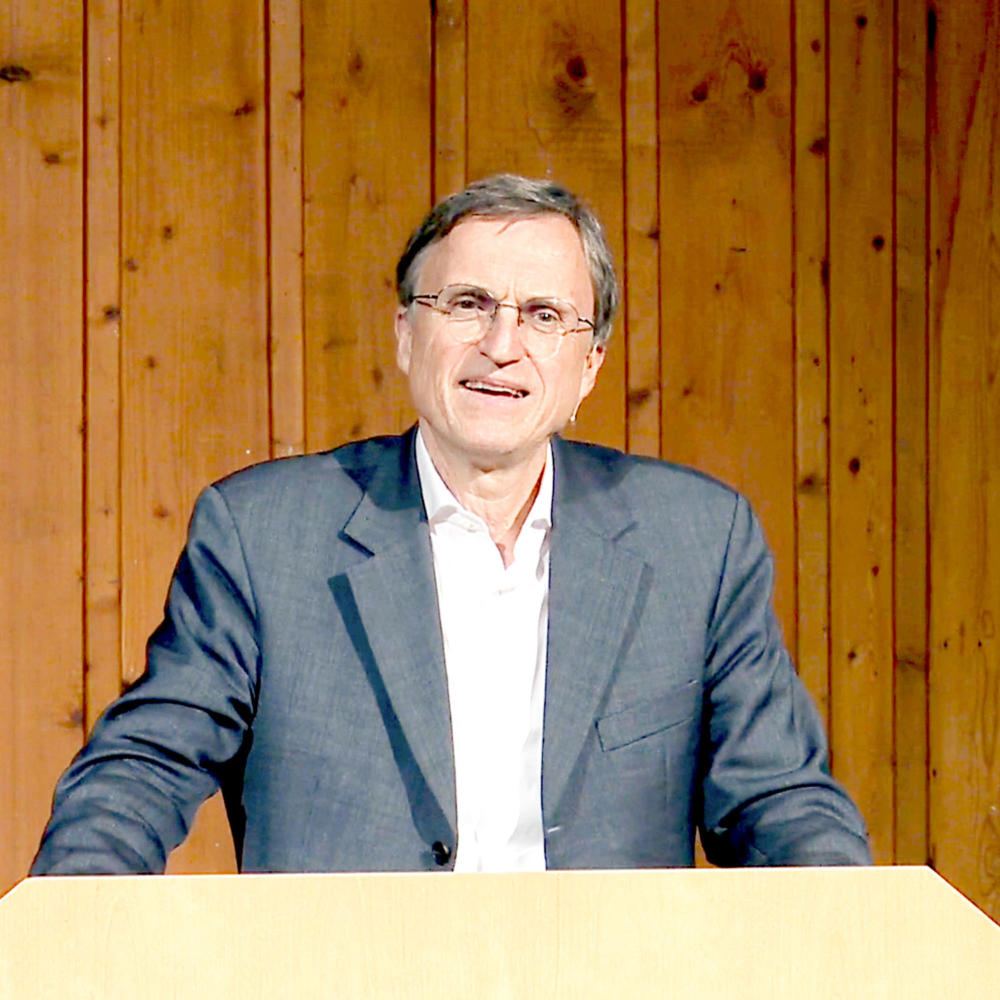
This article is an extract from Georg Soldner’s lecture “Covid-19 – What can Medicine Learn From the Pandemic”, given as the first of a series of lectures entitled The Signature of Our Time, which started on 12 October at the Goetheanum. The lectures will be available on video with English interpretation.