
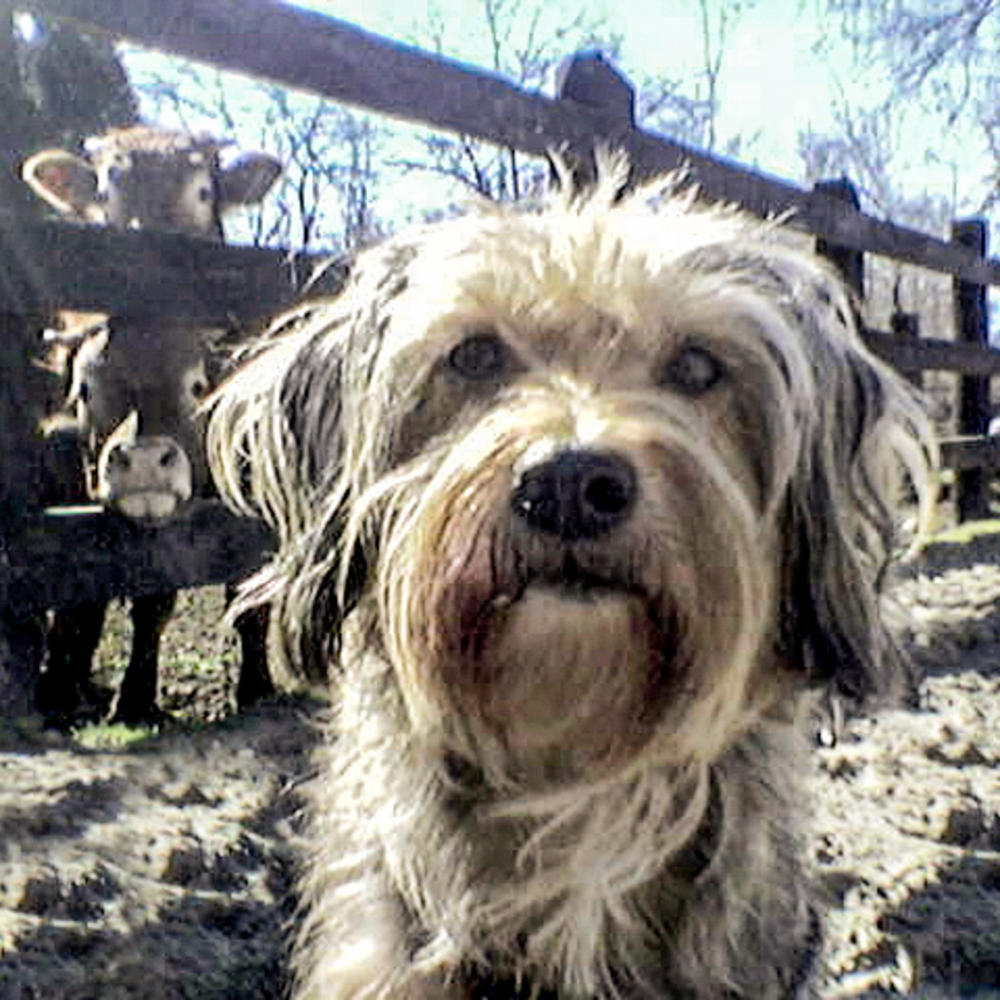
«The animals want to be recognized»
Exactly a hundred years after Rudolf Steiner’s first course for physicians the Goetheanum will host the first international conference for Anthroposophic Veterinary Medicine.
For Sabrina Menestrina, coordinator for this medical specialty within the Medical Section, it is important to understand that animals cannot continue to evolve without humans (and vice versa).
Sebastian Jüngel What is your personal relationship with animals?
Sabrina Menestrina I’ve grown up with animals – even when I was little we always had dogs. Later I knew that I wanted to do something with medicine and realized that I felt close to animals. After medical school, which is combined in Italy for physicians, vets and pharmacists, I became an anthroposophic vet.
Jüngel Even within the same breed of dog one finds different ‹characters›.
Menestrina Yes, we observe traits of individualization when animals live in a family or on a farm – a natural result of being close to humans. Because animals want to be recognized by, and similar to, us. This can lead to rather droll behaviours such as when a dog lays her head on a person’s pillow. They can be so close to humans that it is not at all surprising that dogs save children from danger.
The animals’ sacrifice
Jüngel How should we view domestic animals?
Menestrina Animals are not humans. They need to be out in the open air; they need fresh food, water and sleep; dogs also want to play. Animals are ensouled moving creatures. Fluids move in them and they are led by the wisdom of their instincts. We can also establish an empathetic relationship with animals by being aware of the fact that being an animal constitutes a sacrifice: we humans have left the animals behind on our evolutionary path. If we do not care for them we will lose something on our own path.
Jüngel Rudolf Steiner gave courses for physicians and therapists but not for vets. What is your work based on?
Menestrina Rudolf Steiner has occasionally said something about the being of animals, in the Agriculture Course, for instance (GA 327), or the so-called Butterfly Course (GA 230) or in Manifestations of Karma (GA 120). Animals are very specialized today, very uniform. This is something they cannot escape, unlike humans who are capable of development. Animals express themselves through their sounds, or those that don’t have sounds through their movement gestures, and in this way they signalize to their cosmic group soul that they are on earth. This points to the animal’s relationship with the cosmos. We can learn from this as humans.
Assimilating to their human environment
Jüngel To what extent can the insights of anthroposophic human medicine be extrapolated to veterinary medicine?
Menestrina Initially, this does not seem to be possible. We are vertical beings, animals are horizontal. The two orientations form a cross – the complete human being.
Jüngel To put the question differently: how is illness different in humans and animals?
Menestrina Animals have no individual ‹I› and therefore no karma. They depend on an environment and on food that are suited to them. If this is not the case or other life conditions are not met, animals become sick. Domestic animals are, moreover, very closely connected with us humans and not as individualized as we are. They perceive our etheric and astral aura and are influenced by our thoughts, feelings and intentions.
There is a study that shows that the stress we experience is transferred to our animals. This is why animals also need treating today. As a vet I heal sick animals but I also ‹educate› their owners so that they develop a sensible relationship with their animals. An animal’s sickness tells me much about its owner. It can happen that I talk to that person’s GP about this. The animals mirror us.
Jüngel Do animals feel pain?
Menestrina Yes, they do, but they cannot reflect on it. Warm-blooded animals like horses suffer intensely because they don’t ‹know› how to keep their pain at a tolerable level. Animals don’t feel the pain in particular places but all over. This inability to understand pain causes them to develop fear.
This is an indication that animals stayed behind human evolution in a phase when they did not have the possibility to overcome pain – in favour of human evolution. Animals don’t feel fear individually but the fear takes hold of the whole animal group, extending all the way up to the group soul.
Jüngel How is it with death?
Menestrina As far as I can tell, animals are not afraid of death, because death is natural for them. Unlike humans, animals don’t need to think about what eternity may look like – they are always connected with it anyway via the group soul.
Animals can’t replace relationships
Jüngel People say that one can train animals to look after another being.
Menestrina That is correct. But we need to be careful here: animals cannot replace human relationships. Animals are perfect and beautiful, but they don’t develop the kind of love we can feel. People often project their needs on animals and therefore do things like feeding them treats. But that is not love. The concept of love itself needs looking at today: love is interest in each other based on knowledge. For some people their pet is a kind of ‹hairy child›, a child substitute. Less and less children are born today! This will lead to us having more vets than paediatricians in Europe. Italy holds the record in this respect, but other European countries come a close second.
First international anthroposophical conference for veterinary medicine: Solutions and Questions of Anthroposophic Veterinary Medicine, 20 to 22 March 2020, Goetheanum
Web www.medsektion-goetheanum.org/fileadmin/user_upload/VET2020_EN.pdf