
Islam and Anthroposophy
In Egypt, anthroposophy lives as a cultural and cross-cultural impulse that unfolds potentials both in Sekem and in anthroposophical education and training centres.
The anthroposophical movement and Society in Egypt were founded by Ibrahim Abouleish and a group of people from Europe. An anthroposophical branch and Class work have evolved from this foundation.
Branch meetings are attended by people staying in Sekem, including short-term interns and lecturers or guests from all over the world. Due to the many languages spoken by those coming together here, English has become the lingua franca. The life of the branch is enriched by people with an Egyptian, or Muslim, background who, as a result of their education, are open to holistic approaches.
Interweaving cultures
Egypt is a predominantly Muslim country, with 90 percent of the population being Muslims and six to ten percent Coptic Christians. As other countries have done in recent decades, and generally in times of growing disorientation and economic uncertainty, Egypt also tends towards more traditional and conservative values.
It is thanks to Ibrahim Abouleish that Sekem has become a place of potential diversity. His artistic interweaving of cultures and religions is apparent in the building of bridges between East and West he embodied in his very person: having grown up as a Muslim, he went to study and work in Austria, where he embraced Western culture and Anthroposophy. For 40 years he and his closer co-workers explored the connections and commonalities of the esoteric Quran and Anthroposophy. Sekem itself is therefore founded on a fusion of East and West, of Islam and Anthroposophy.
This fusion is applied in practice to this day in the ongoing education, in Arabic, of everyone working in Sekem (and in the last seven years also in Cairo’s Heliopolis University in Cairo), in the pedagogical concepts of kindergarten, school and vocational training (teachers, eurythmists, speech artists) and in biodynamic farming. The local Bedouin population is also represented in the school and in businesses. For many years in-depth anthroposophical training programmes were presented at the Medical Center, which is currently being updated to include holistic medicine and a holistic insurance system.
In addition, there is the celebration and appreciation of the diverse Islamic and Christian religious and cultural festivals.
Personal interest in anthroposophy
In some parts of Egypt, such as Luxor, Sekem supports the opening of Waldorf Schools by committed teaching professionals.
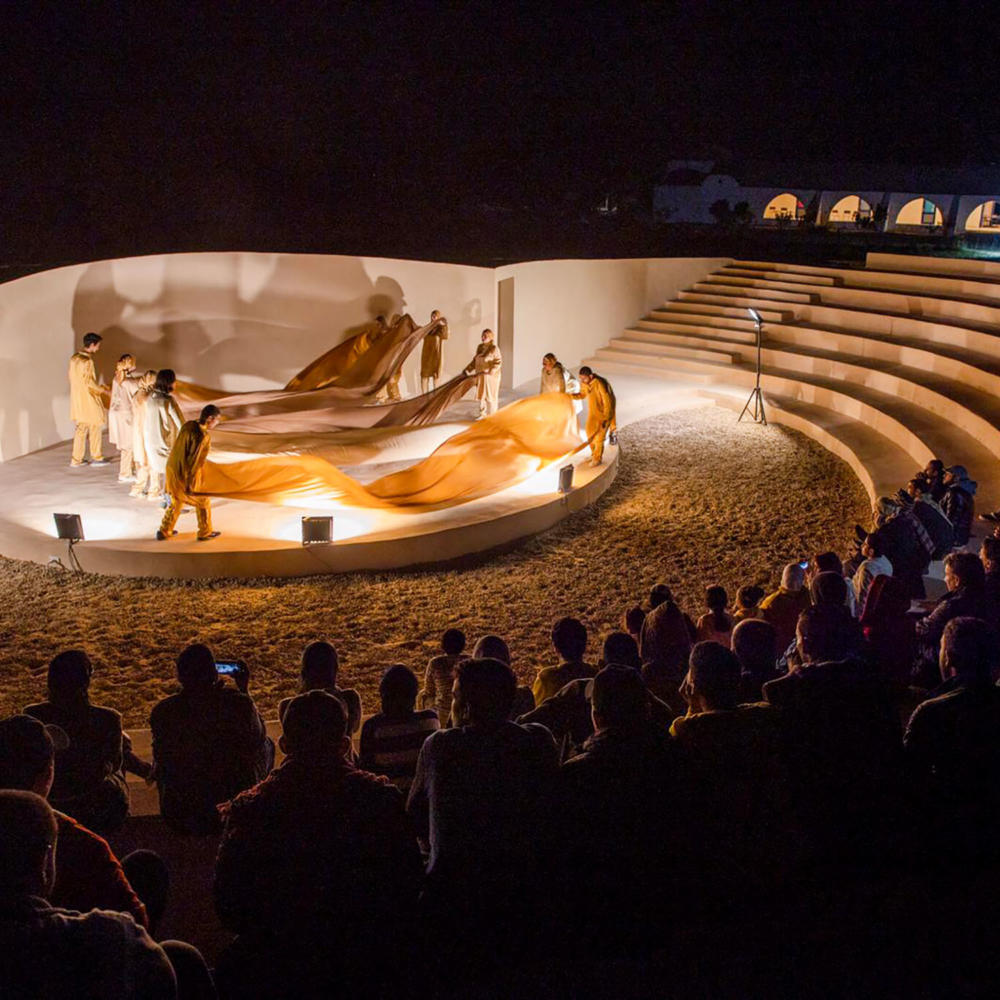
Thanks to the growing farming community in Wahat, Bahariya, more educational and cultural opportunities have been opening up for the inhabitants of this oasis. Here, too, the connection of Islam and Anthroposophy is tangible, for instance when Egyptians present a eurythmy performance for farm workers and community members in the new amphitheatre.
Ibrahim Abouleish knew how to introduce those around him to Anthroposophy so that they were able to connect with it and continue to study Rudolf Steiner’s work for themselves. Sekem has been working more closely with the Goetheanum in recent years. We are collaborating with the Section for Agriculture on bringing the biodynamic approach to farming and to the environment to universities in other parts of the world.
Web Sekem